


Long Range Night Vision Binoculars vs Thermal Monoculars: Which Is Better for Nocturnal Wildlife Observation?

Quick Answer
Long range night vision binoculars and thermal monoculars answer different questions. Digital night vision uses available light or reflected infrared illumination to show a scene. A thermal imager displays differences in emitted infrared radiation, which can make a subject stand out from its surroundings. For nocturnal wildlife observation, choose according to the detail you need, the viewing conditions, and the evidence available for the exact model. Neither technology guarantees species identification at an advertised maximum distance.
A Ranch Viewpoint, Not a Chase
Imagine watching an authorized field edge from a stable position on your ranch. You notice something moving near a fence, but you cannot tell whether it is an animal or vegetation. One useful task is finding where activity is occurring. Another is seeing enough shape and context to understand it. Treat those as separate questions before choosing equipment.
Thermal contrast may help with the first question. A digital night view may supply additional visual context for the second, when lighting, focus, distance, and obstruction permit. Do not approach an uncertain animal just to improve the picture. Maintain the boundaries described in the National Park Service wildlife-watching guidance, and follow the rules applicable to your location.
Key Takeaways
- Detection is not identification: noticing a target does not establish what it is.
- IR range is conditional: illumination, reflections, focus, and the scene affect digital viewing.
- Thermal needs contrast: a warm-looking patch is not a complete visual description.
- Obstacles still matter: neither option should be purchased as a see-through-foliage solution.
- Choose the workflow: handling and interpretation can matter more than an impressive maximum-distance claim.
Definition: Reflected Light Versus Thermal Contrast
In this comparison, digital night vision means a camera-based viewer that presents an electronic image. Its illuminator, when used, sends infrared light into the scene, and the device receives reflected light. That process differs from producing a thermal image. The NASA explanation of infrared radiation provides background on the distinction between reflected near-infrared information and emitted thermal radiation.
A thermal monocular is a one-eye viewing device built around thermal imaging. Its display represents detected radiation through a selected visual palette. A bright or dark area needs interpretation; palette color alone does not prove the object’s identity or precise temperature. Product-specific measurement claims require separate documentation.
Long range night vision binoculars is also a broad shopping phrase, not one standardized performance level. Different products can use different viewing arrangements and electronics. Compare the operating principle of the exact device rather than treating the words on its category page as a technical guarantee.
Build an Observation Routine Around Uncertainty
Start with the question you can actually answer
At a familiar viewpoint, first establish the scene: boundary lines, safe exits, nearby reflective surfaces, and areas where vegetation blocks the view. Decide whether the session is about noticing activity or recognizing visible characteristics. Keep a written distinction between an observed shape and your interpretation of it.
If a subject is only a small moving patch, record that limitation. A second look with another device can add evidence, but two uncertain images do not automatically become a certain identification. Stop when the view no longer supports a responsible conclusion.
Stay stationary while comparing equipment
Lower the viewer before walking, and use ordinary lighting for your route. Compare two devices from the same safe position and similar viewing conditions. Otherwise, a change in distance or weather may look like a difference in equipment quality. Avoid directing illuminators toward people or disturbing resting wildlife.
What Changes the Useful View?
For digital equipment, ask about the base image before discussing enlarged views. Focus, scene illumination, target contrast, and motion influence whether a feature is visible. Nearby leaves or reflective surfaces can interfere with the usefulness of an illuminated scene. More illuminator output is not a universal fix, and digital zoom cannot guarantee recovery of detail that was never captured.
Thermal viewing has its own limits. A subject that contrasts with the background in one situation may be less distinct in another. A partial view through gaps is not the same as seeing through a solid obstacle. Weather and background conditions should be described in any demonstration you use to judge performance.
Handling affects both technologies. Controls should be usable without losing your stable position, and the display should be comfortable to interpret. A monocular and a two-eye viewer can feel quite different during a long stationary session. Comfort is a reason to test the viewing arrangement, not evidence that one technology is universally superior.
Comparison Table: Match the Tool to the Question
| Observation question | Digital night vision binoculars | Thermal monocular | Buying check |
|---|---|---|---|
| Where is activity occurring? | May show movement when the scene is adequately visible | May highlight a subject with useful thermal contrast | Ask for examples resembling your viewpoint |
| What visible features can I recognize? | Can provide illuminated scene detail when conditions allow | Provides a thermal representation rather than ordinary surface appearance | Separate identification evidence from detection claims |
| Can I observe behind vegetation? | Only the available line of sight can provide detail | Do not assume it reveals subjects through solid cover | Reject demonstrations that hide obstruction limits |
| Can I save useful evidence? | Recording depends on the exact model | Recording also depends on the exact model | Review original files and the transfer process |
| Will it suit a long stationary session? | Viewing arrangement, support, and controls matter | Eyepiece comfort and handling matter | Evaluate the whole observation routine |
Evaluate the Supplier Before Choosing a Price Tier
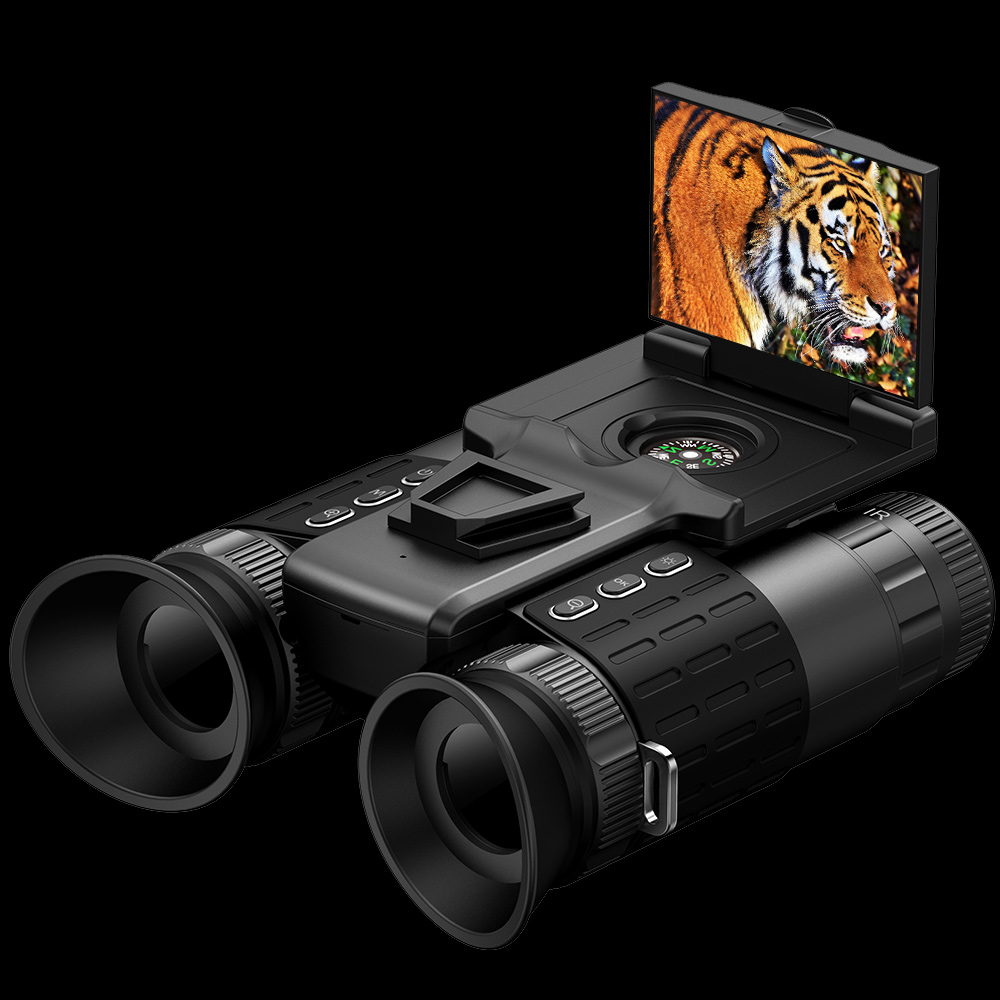
Begin with the WildGuarder night vision binocular category and thermal imager category to separate the two product paths. A model such as the WG9600 can then be checked against your digital-viewing requirements. A category link is a starting point; it does not establish that every listed product supports the same operation.
Ask for an explanation of the quoted range, including target, conditions, and whether the result means detection or recognition. Use WildGuarder product support to resolve unclear features, and read the return policy before ordering. Keep the written response with your shortlist so an appealing headline does not replace the answer.
WildGuarder’s wider outdoor range also includes night vision goggles, range finders, trail cameras, and solar panel accessories alongside thermal imagers. These categories serve different roles: unattended recording, distance measurement, and supported power accessories do not replace a clear handheld view. Check compatibility individually rather than assuming a shared brand makes accessories interchangeable.
FAQ
How far can budget night vision binoculars see?
There is no useful single distance for every budget device. A range claim needs a target and conditions, plus a statement of what was visible. Seeing that something is present can happen before there is enough detail to recognize it. Ask for evidence of your required task.
Do I need premium digital night vision binoculars for nighttime nature observation?
Not necessarily. A premium purchase makes sense when documented capability or handling solves a real limitation in your routine. For a modest fixed viewpoint, a simpler option may be sufficient. Compare the evidence and complete setup rather than using the price tier as a performance test.
Are budget digital night vision binoculars good enough for wildlife watching?
They can suit some observation tasks if the scene, distance, and expected detail are realistic. Check an example close to your intended conditions and be willing to leave an uncertain subject unidentified. Responsible wildlife watching does not require turning every distant movement into a definite species label.
Are night vision binoculars worth buying if I already have a trail camera?
Possibly, because a trail camera and a handheld viewer do different jobs. A trail camera monitors a configured area while you are absent. Binoculars let you choose an active view while present. Add the handheld device only if that second role is useful to you.
Are budget digital night vision binoculars good enough for long-range observation?
Do not assume so from the advertised distance alone. A budget device may reveal activity without resolving the detail needed for your long-distance observation. Define the smallest meaningful feature you need to see and ask whether comparable evidence supports that expectation before buying.
How do I choose digital night vision binoculars for long-range observation?
Start with a specific viewpoint, subject, and recognition requirement. Then compare base-image clarity, focusing, stability, illumination, power, and handling. Treat unexplained maximum-distance figures as unanswered questions. A well-supported modest claim is more useful than a dramatic claim without test conditions.
How can I compare low-light performance between two digital night vision binoculars?
Use the same subject and position with comparable lighting, focus, and display settings. Review the ordinary view before applying enlargement, and compare original recordings if available. Note what you cannot tell as well as what you can; uncertainty is part of an honest comparison.
Budget vs mid-range digital night vision binoculars: where is the value sweet spot?
The value point is where your essential requirements are met without paying for unused complexity. Mid-range equipment may be worthwhile for a particular improvement, but the benefit should be visible in evidence or handling. Include the necessary accessories and support terms in the cost comparison.
Conclusion
Choose long range night vision binoculars for the visual task they can document, and consider thermal when finding useful contrast is a separate need. Neither removes the need for careful interpretation. Compare relevant options in the WildGuarder Official Store, ask the unresolved questions, and buy the setup that fits your actual observation rather than the largest number on a listing.
Related Reading
- Can You Use Best Night Binoculars for Farm Monitoring?
- Can You Use Best Infrared Binoculars for Farm Monitoring?
- How to Use in Rain Best Night Vision Binoculars for Farm Security?
- How Long Night Vision Binos for Cabin Security?
- Infrared Night Binoculars Compared: A Practical Side-by-Side Guide
- Night Vision Binocular IR Range Explained: How to Read Real-World Limits
- Binoculars and Night Vision Value Guide: Features That Matter Most
- Understanding Night Sight Binoculars: What to Look For Before You Buy
- Binoculars with Night Vision Explained: What It Means and How to Choose
- Top 10 Things You Need to Know About Night Vision Binoculars


 Night Vision Binoculars


 Night Vision Goggles


 Night Vision Monoculars


 Long Range
 With Rangefinder
 Full Color
 Head-Mounted
 Large Screen
 WiFi App
 3D Naked Eye
 Multi-Color
 Flashlight
 Compact Size
 Thermal Imaging Monoculars

 Trail Cameras


 Rangefinder Binoculars


 Rangefinder with Night Vision


 Spotting Scope

 Monoculars

 Digital Binoculars Cameras


 Time Lapse Cameras


