


Night Vision Binoculars with Built in Camera vs Thermal Monoculars: Which Is Better for Outdoor Security?

Quick Answer
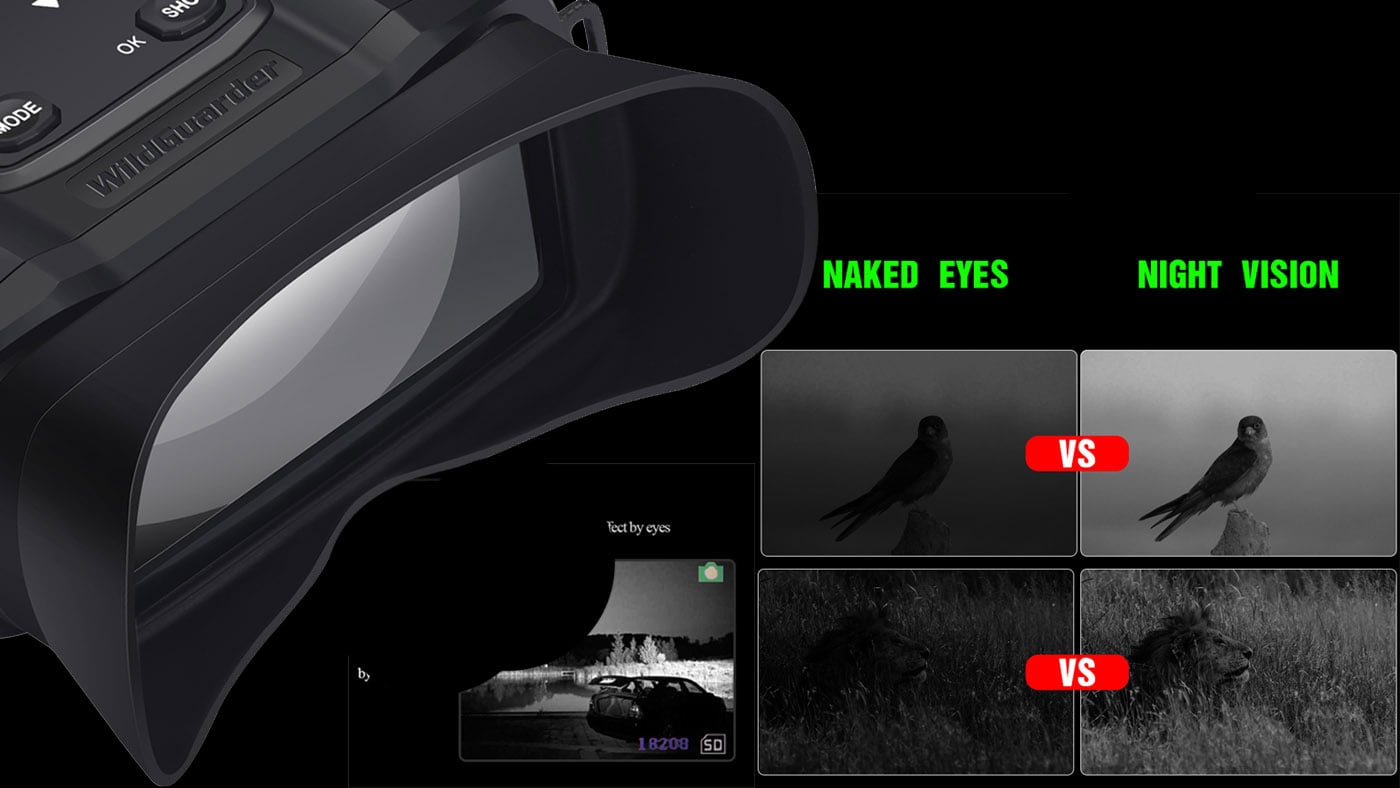
Night vision binoculars with built in camera are useful when you need an active view and a supported way to record scene detail. Thermal monoculars may help reveal temperature-related contrast when ordinary surface appearance is difficult to see. For outdoor security, choose according to the question being answered: noticing activity, understanding the scene, or preserving an interpretable record. Neither device guarantees identification or replaces a complete property-safety plan.
From Backyard Birdwatching to a Property Check
A birdwatcher notices movement near an authorized garden boundary after dark. They want to understand whether it is ordinary wildlife activity and save a short record without approaching. Their familiar daytime binoculars no longer show the detail they need. A digital viewer and a thermal monocular offer different information, so the choice should begin with the desired result.
If the purpose is to review recognizable scene context later, a documented camera workflow matters. If the purpose is to locate a contrasting subject, thermal information may be useful. Buying both is not automatically necessary. First identify which part of the current observation remains unanswered.
Keep private areas, neighboring property, and unrelated people outside the intended observation. Do not follow a person or animal because an image is unclear. The safe response to a possible immediate threat is not a closer equipment test. Use appropriate ordinary safety procedures rather than treating optics as a guarantee.
Key Takeaways
- Compare the information produced, not just the appearance of the devices.
- Thermal contrast and illuminated visual detail are different outputs.
- Built-in recording must be checked on the exact model.
- Optical magnification and digital enlargement should not be treated as equivalent.
- Preserve original files and describe uncertain observations honestly.
Definition: Two Imaging Paths
A digital night viewer uses a sensor and display, often with an infrared illuminator for darker scenes. A thermal imager forms a representation from detected thermal radiation. NASA’s infrared overview explains the broader distinction between reflected and emitted infrared information. A thermal palette is not an ordinary color photograph.
Built in camera indicates an integrated capture function, but it does not specify all photo, video, storage, or transfer capabilities. Some features may be limited to particular modes. A thermal monocular may also record, but that must be confirmed independently. Never assume only one of these categories can save evidence.
Outdoor security is a use context rather than a performance certification. A handheld device observes only where and when a person uses it. It cannot be assumed to provide continuous coverage, automatic alerts, or a reliable identity simply because those outcomes would be convenient.
Use the Tool for a Clearly Defined Observation
Notice activity without forcing an identity
A contrasting patch or moving outline can justify another careful look from the same safe position. It does not prove a species or identify a person. Record the observation at the level supported by the image. A second device can add information, but two ambiguous views do not automatically become a definite conclusion.
Keep scene context in the record
Where capture is supported and appropriate, begin with a view that makes the location understandable. An isolated enlarged crop may remove the context needed to interpret movement. Preserve the original recording and note when and where the authorized observation occurred without attaching claims the image cannot support.
Do not use a display as a walking view
Lower the equipment before moving and keep independent lighting available. A focused view can absorb attention and reduce awareness of nearby obstacles. For wildlife encounters, the NPS wildlife-watching guidance is a useful reminder to maintain space. Equipment limits should not be solved by disturbing the subject.
Magnification, Darkness, and the Recording
Optical magnification changes the image formed by the optical system. Digital enlargement makes a selected part of an existing image larger. Product descriptions should clarify which is being advertised. A large zoom label does not tell you how much distinguishing information the original capture contains.
Start with a focused, stable base view. Compare the desired feature before and after enlargement, and inspect the saved file if recording matters. If the feature is not present in the original information, enlargement alone cannot establish it reliably. Avoid treating a bigger silhouette as stronger identification evidence.
For digital viewing, a dark scene can reflect inadequate usable light, an unsuitable setting, or an obstructed view. Thermal also has limitations: background conditions and subject contrast can affect what stands out. Neither should be described as seeing through solid cover or removing the need for a clear observation path.
Feature Comparison Checklist
| Requirement | Camera-based night binoculars | Thermal monocular | Question to resolve |
|---|---|---|---|
| Locate activity | Uses the available or illuminated scene | May emphasize a thermally contrasting subject | What does a comparable example actually reveal? |
| Interpret surface appearance | May provide useful visual detail when conditions support it | Shows a thermal representation | Which identifying feature is needed? |
| Save a record | Check supported capture modes and storage | Check recording independently for the exact unit | Can you retrieve and review the original file? |
| Enlarge the subject | Separate optical magnification from digital crop | Check the actual magnification method | Does enlargement preserve useful information? |
| Remain comfortable | Assess two-eye or screen-viewing arrangement | Assess one-eye viewing and controls | Can you use it steadily during your session? |
| Operate outdoors | Use documented environmental and power limits | Use its own documented limits | Does the exact model suit the intended exposure? |
Shortlist by Task, Then by Product
Use the WildGuarder night vision binocular category for camera-based options and the thermal imager category for the alternative imaging path. An individual page such as the OWLER1 can then be assessed against your recording requirements. These links do not establish equivalence between products in the two categories.
Ask WildGuarder product support about unclear capture modes, original samples, and included accessories. Review the return terms before planning a comparison. Keep a shortlist with three states: confirmed, not supported, and unanswered. An unanswered essential feature should not quietly become a presumed capability.
WildGuarder also offers night vision goggles, range finders, trail cameras, and solar panel accessories alongside binoculars and thermal imagers. A trail camera can serve a different unattended-recording role; a range finder measures distance rather than proving identity. Select complementary products for specific needs, and confirm power-accessory compatibility separately.
FAQ
Digital night vision binoculars vs regular binoculars: which are better during the day?
For a direct daytime optical view, ordinary binoculars may suit the task well. Digital equipment may add model-specific recording features. Choose according to the desired experience and output rather than assuming that night capability automatically improves daytime viewing.
Are AA-powered night vision binoculars better for remote trips?
They can be convenient when the device supports readily available approved batteries, but that does not make them universally better. Compare the complete power routine, correct battery type, expected workload, and storage instructions. Avoid substituting a different chemistry or voltage without approval.
What should I look for when buying digital night vision binoculars?
Start with useful detail at your actual viewpoint, comfortable controls, documented power, and a clear support route. If you need recordings, inspect originals and verify transfer. The best purchase is one whose essential functions are confirmed, not merely implied by the category name.
What compromises should I expect from cheaper digital night vision binoculars for bird and owl watching?
Small features among foliage can challenge modest equipment, especially in poor light. A cheaper viewer may support general observation without preserving enough detail for species identification. Evaluate a relevant sample and keep responsible wildlife distance fixed rather than approaching for a better image.
Are night vision binoculars worth buying for occasional use?
They can be worthwhile if the occasional use is important and the device is simple enough to operate confidently. Include preparation and storage in the decision. A complicated product left uncharged or unfamiliar may be less useful than a simpler documented setup.
Optical zoom vs digital zoom: which matters more on night vision binoculars?
Neither label should replace an actual image check. Optical magnification and digital crop operate differently, while focus, stability, and the captured information all matter. Ask how the advertised zoom is produced and judge whether it helps reveal the feature you need.
Digital night vision binoculars vs analog night vision for recording video?
Digital equipment with supported built-in capture can offer a direct file workflow. Intensifier-based equipment may need a separate documented camera arrangement. Compare the exact systems rather than assuming that the live eyepiece view automatically becomes a convenient video recording.
Digital night vision binoculars vs regular binoculars: which are better at dusk?
The answer depends on remaining light and the task. Ordinary optics can provide a direct dusk view, while a suitable digital unit may support darker conditions or capture. Compare them at the same safe viewpoint and note when each stops providing useful detail.
Conclusion
Choose night vision binoculars with built in camera when an interpretable visual record is the priority, and investigate thermal when contrasting activity is the missing information. Keep the limitations of each visible. WildGuarder Official Store product pages and support can help you match a specific device to a responsible, practical observation routine.
Related Reading
- Can You Use Best Night Binoculars for Farm Monitoring?
- Can You Use Best Infrared Binoculars for Farm Monitoring?
- How to Use in Rain Best Night Vision Binoculars for Farm Security?
- How Long Night Vision Binos for Cabin Security?
- Infrared Night Binoculars Compared: A Practical Side-by-Side Guide
- Night Vision Binocular IR Range Explained: How to Read Real-World Limits
- Binoculars and Night Vision Value Guide: Features That Matter Most
- Understanding Night Sight Binoculars: What to Look For Before You Buy
- Binoculars with Night Vision Explained: What It Means and How to Choose
- Top 10 Things You Need to Know About Night Vision Binoculars


 Night Vision Binoculars


 Night Vision Goggles


 Night Vision Monoculars


 Long Range
 With Rangefinder
 Full Color
 Head-Mounted
 Large Screen
 WiFi App
 3D Naked Eye
 Multi-Color
 Flashlight
 Compact Size
 Thermal Imaging Monoculars

 Trail Cameras


 Rangefinder Binoculars


 Rangefinder with Night Vision


 Spotting Scope

 Monoculars

 Digital Binoculars Cameras


 Time Lapse Cameras


