


Best Night Vision Binoculars Uk IR Range Explained: What Affects Performance in the Field

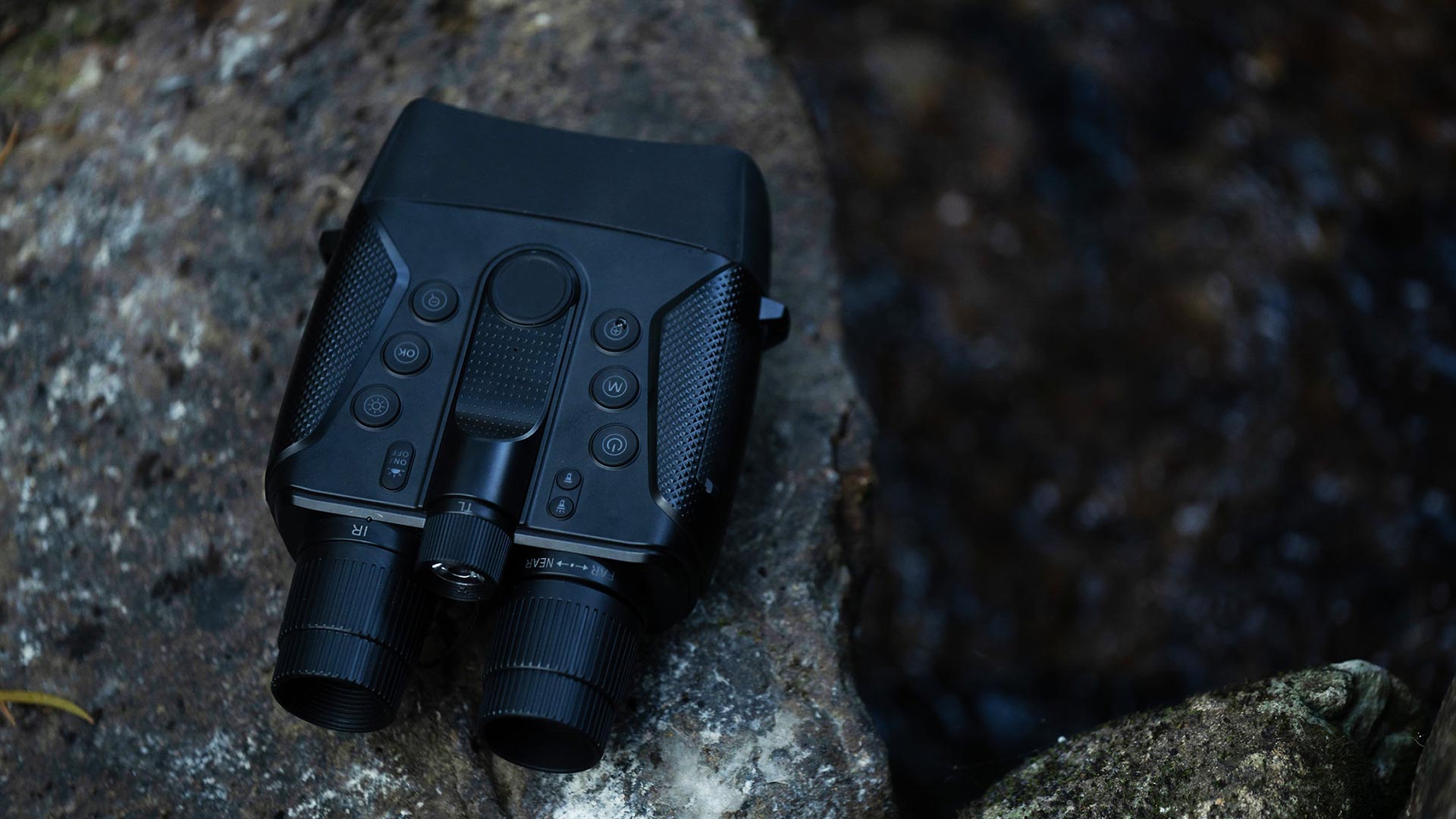
Quick Answer
For someone researching best night vision binoculars UK options, useful IR range is the distance at which the device shows the detail needed for a particular observation. It is not simply the largest number on a product page. Foreground reflections, focus, subject size, available light, and weather can change the result. Compare evidence from similar scenes and treat a detection claim separately from a claim that you can identify an animal.
A Camper Looking Across a Field
Consider a camper observing an open field from an authorized, stable viewpoint. A nearby hedge occupies one corner of the image, while a darker treeline lies farther away. The camper notices movement but cannot confidently describe it. Increasing the displayed enlargement makes the movement bigger, yet the identifying detail remains absent.
This situation is a useful purchasing test. Does the equipment help answer the camper’s real question, or does it merely make a vague shape easier to notice? A good comparison records both outcomes. The observer should not shorten the wildlife distance to rescue an equipment demonstration or leave safe ground for a clearer line of sight.
UK in the search phrase describes the buyer’s market, not a different optical principle. Confirm delivery, charging requirements, seller identity, and support for your location directly before ordering. This guide does not establish local stock, a UK shop address, or a destination-specific shipping promise.
Definition: What IR Range Describes
Many digital night viewers illuminate a scene with near-infrared light and form an electronic image from the returned light. That is different from thermal imaging. NASA’s introduction to reflected near-infrared waves explains the underlying distinction. A useful product claim still needs to identify the target and conditions under which the view was obtained.
Detection means noticing something. Recognition means resolving enough general characteristics to place it in a meaningful category. Identification requires the particular distinguishing detail relevant to your task. Those outcomes do not necessarily occur at the same distance, and an advertisement that says only range leaves an important question unanswered.
Five Things That Change the Field Result
Foreground objects can dominate the image
A leaf or reflective surface close to the viewer may appear much more prominent than the distant subject. Before concluding that the device lacks reach, inspect the view path from your safe position. A small, permitted change of angle can be more informative than repeatedly increasing illumination. Do not remove vegetation or disturb a habitat for this purpose.
Subject detail matters more than the label
A broad outline against an open background is a different task from a small feature among branches. Ask what the demonstration actually resolved. If a seller shows only a bright dot, that does not support a detailed wildlife-identification promise. An honest sample should make the limits visible rather than hide them behind a caption.
Focus and stability must come first
Set up the basic view before applying digital enlargement. Follow the model’s instructions for image focus and any separate viewing adjustment. A moving grip can make a good view harder to judge, so use a comfortable stationary posture or an explicitly supported mount. Enlarging a shaky or unfocused image rarely settles the question.
Changing conditions complicate comparisons
A demonstration made in an open, clear scene cannot be assumed to predict a damp, cluttered viewpoint. Record the conditions alongside the result. If you compare two products on different evenings, note that limitation instead of assigning every visible difference to the equipment. Do not manufacture a performance ranking from unlike examples.
The live view and the saved file are separate checks
A display may look acceptable during observation while a saved clip does not preserve the feature you wanted. Review the original recording using the supported transfer method. Conversely, a viewing adjustment might make the screen uncomfortable without proving that the sensor failed. Keep those two observations separate when asking for assistance.
Key Takeaways
- Write down the feature you need to see before comparing distances.
- Check the ordinary focused view before judging enlarged detail.
- Ask what a range demonstration proves and what it leaves uncertain.
- Keep the subject distance responsible even when the image disappoints.
- Confirm location-specific ordering details without assuming the search wording guarantees them.
Questions a Supplier Should Be Able to Address
Start with the WildGuarder night vision binocular category, then investigate an individual option such as the WG9801. If another digital design suits your handling preferences, compare the WG6300 product information against the same requirements. The purpose is a consistent checklist, not a claim that these products have identical performance.
Request the applicable manual, a description of the sample scene, and the meaning of the stated viewing range. Use WildGuarder product support for unresolved questions and read the return terms before planning any evaluation. Do not assume a product can be used outdoors without limits merely because the listing includes an outdoor photograph.
IR Performance Factor Table
| Factor | What to record | What it helps explain |
|---|---|---|
| Target | Its size, visible features, and background | Why detection may precede useful recognition |
| Foreground | Nearby leaves, reflective surfaces, or obstructions | Why the far scene may be hard to interpret |
| Focus | Adjustment procedure and base-view result | Whether enlargement is masking an unresolved setup issue |
| Conditions | Available light, visibility, and exposure limits | Why a different evening is not a controlled comparison |
| Recording | Original file and the feature actually retained | Whether a memorable live view becomes a useful record |
| Support | Exact model, manual, and unanswered claim | Whether the buying decision is sufficiently documented |
Make the Outing a Responsible Observation
Choose the return route and stopping time before observation becomes absorbing. Keep ordinary route lighting independent of the viewer, and lower the device before walking. For animal encounters, the NPS wildlife-watching guidance provides a useful general reference on maintaining space. Local site rules and permissions still need to be checked separately.
WildGuarder’s broader outdoor selection includes night vision goggles, range finders, trail cameras, thermal imagers, and solar panel accessories. Their roles differ: unattended recording or distance measurement does not automatically improve handheld image detail. Choose an additional product only for a defined job and verify accessory compatibility with the particular model.
FAQ
How far can night vision binoculars detect an owl?
There is no universal owl-detection distance. Size, posture, foliage, lighting, and the device all affect what becomes visible. Noticing a shape is also different from identifying an owl. Observe from a responsible position and leave the sighting uncertain if the image lacks distinguishing detail.
Can I point digital night vision binoculars toward the sun?
Do not use the sun as a target for checking the device. Follow the manufacturer’s bright-light precautions and keep the viewer pointed away from intense sources. An electronic display should not be treated as permission to conduct an improvised solar observation or equipment stress test.
Can I use eyeglass cleaner on night vision binoculars?
Only use a cleaner approved for the relevant surfaces by the equipment manufacturer. A product suitable for eyeglasses is not automatically suitable for every coating or display. Follow the recommended debris-removal and cleaning sequence rather than wiping dirt across the lens.
Which specifications matter least when shopping for digital night vision binoculars for camping?
Numbers unrelated to your camp routine deserve less attention. Large digital enlargement and saved-file dimensions may be less useful than clear focus, manageable controls, and appropriate power. Start with the actual view and the complete kit you can comfortably carry.
Can nearby headlights overwhelm digital night vision binoculars?
They can make a scene difficult to judge, depending on the device and conditions. Lower or redirect the viewer safely and follow its bright-light instructions. Avoid using a passing vehicle as a comparison target, and never let the display distract you near a road.
How does an IR-cut filter affect digital night vision binoculars?
The filter controls infrared light reaching the sensor and may be involved in day or night operation. Use the supported mode selection for the exact product. Do not move an unmarked component or open the device because a scene appears unexpectedly dark.
Can beginners use digital night vision binoculars?
Yes, provided they learn the controls and begin with a familiar stationary scene. Practice focusing, saving a sample, and stowing the viewer before an outing. A clear manual and accessible support are more useful for learning than a long list of unfamiliar modes.
What does day and night mode mean on digital night vision binoculars?
It refers to operating settings intended for different lighting conditions. The exact behavior varies by model, including how infrared illumination or filtering is handled. It does not promise that every scene will appear equally detailed in daylight and darkness.
Conclusion
The best night vision binoculars UK search becomes more productive when range is tied to a real viewing task. Define useful detail, compare documented examples, and keep outdoor limits part of the decision. The WildGuarder Official Store offers product information and a support route to help you evaluate a suitable digital viewer without relying on the biggest distance claim.
Related Reading
- How to Use for Camping IR Night Vision Binoculars for Family Camping?
- How to Use for Hunting Night Binoculars for Sale for Family Camping?
- Night Vision Binoculars for Sale Battery Life Explained: What to Expect Before You Buy
- How to Use Goggles Night Vision for Backcountry Camping
- Night Goggles Vision vs Night Vision Monoculars: Which Is Better for Backcountry Camping?
- How to Choose Monoculars for Backcountry Camping
- Monocular Night Vision: Real-World IR Range for Backcountry Camping
- How to Choose Best Binoculars with Camera for Camping
- Night Vision Binocular IR Range Explained: How to Read Real-World Limits
- Top 10 Things You Need to Know About Night Vision Binoculars


 Night Vision Binoculars


 Night Vision Goggles


 Night Vision Monoculars


 Long Range
 With Rangefinder
 Full Color
 Head-Mounted
 Large Screen
 WiFi App
 3D Naked Eye
 Multi-Color
 Flashlight
 Compact Size
 Thermal Imaging Monoculars

 Trail Cameras


 Rangefinder Binoculars


 Rangefinder with Night Vision


 Spotting Scope

 Monoculars

 Digital Binoculars Cameras


 Time Lapse Cameras


