


How Far Can Binoculars Where to Buy Work in Overnight Camping?

Quick Answer
If your binoculars where to buy research is really about seeing farther during overnight camping, ask sellers for evidence of useful detail in a comparable scene. The place you buy does not determine viewing range. The exact equipment, illumination, target, focus, and conditions do. Separate noticing activity from identifying it, and choose a documented setup that works from a responsible campsite viewpoint without depending on the largest advertised distance.
Key Takeaways
- Translate where-to-buy research into a clear viewing requirement.
- Compare near, middle, and distant sightlines separately.
- Request the conditions behind a range example, not just the number.
- Keep the return route and ordinary lighting independent of the viewer.
- Use seller support to resolve an essential uncertainty before purchase.
Definition: Range Is an Outcome at a Viewpoint
A viewing-distance claim is incomplete without saying what could be seen. Detection might mean noticing movement or a shape. Recognition requires more characteristics, and identification needs the specific detail relevant to the task. A camper may be satisfied with one outcome while a wildlife observer needs another.
Digital night equipment may use reflected infrared light. The NASA near-infrared overview provides technical background, but it does not assign a range to any consumer product. A listing still needs model-specific evidence and a description of the scene.
The phrase binoculars where to buy describes a purchasing question rather than a device specification. A specialist shop, a marketplace listing, or an official store can each be investigated, but the evidence and terms of the particular offer matter. A familiar channel name should not replace verification.
Three Sightlines from a Ranch Campsite
A ranch owner camping on permitted land chooses one stable observation point. Nearby equipment forms a close view, an open boundary forms a middle view, and a treeline forms a distant view. These are three separate tasks, even though the observer does not move.
The close scene might be limited by minimum focusing distance or prominent reflections. The middle scene may provide the most useful context. The distant scene may show only activity without enough detail to identify the source. A good equipment decision recognizes all three instead of assigning one impressive distance to the entire evening.
The owner can describe those sightlines to a seller without giving private location details. State the approximate observation task, the type of feature needed, and the general conditions. Ask which original example supports it. Do not approach wildlife or cross a boundary just to reproduce an advertisement.
What to Ask About Each Sightline
The close view: can the equipment focus appropriately?
A device intended for distant observation may not suit a nearby object. Ask for the documented focusing limits and adjustment method. If you plan to inspect equipment close to camp, ordinary lighting may be the more practical tool. A night viewer is not a replacement for every routine task after sunset.
The middle view: is the scene interpretable?
Look for stable, focused detail and enough context to understand movement. Check whether the device can be held comfortably for the planned interval. A product that looks clear for a moment may become awkward over a longer session. Controls and posture belong in the comparison beside image specifications.
The distant view: what remains uncertain?
Ask whether an example demonstrates an outline, a general category, or an identifying feature. Do not allow the word clear to substitute for that description. If a feature is absent in the base image, digital enlargement cannot establish it simply by making the subject occupy more of the display.
Compare like conditions when possible. A demonstration of a large static object in an open scene is not equivalent to a small moving animal among foliage. When conditions differ, keep the difference visible in your notes rather than manufacturing a direct performance ranking.
Campsite Range and Buying Checklist
| Part of the task | Question for the seller | What counts as useful evidence? |
|---|---|---|
| Close campsite detail | Does the focus range suit the intended object? | Manual information and an appropriate example |
| Middle-distance context | Can the ordinary view show the feature comfortably? | A focused sample with scene context retained |
| Distant activity | Is the stated result detection or identification? | An original example with target and conditions explained |
| Longer evening | Which workload supports the runtime claim? | Illumination and recording conditions stated |
| Practical setup | What items are required and included? | A complete model-specific kit description |
| After-purchase help | Who answers questions and handles returns? | Current written terms and a clear contact route |
Use the Viewer Without Extending the Risk
Set a planned end time and keep lighting available for packing and movement. Stay stationary while viewing, then lower the device before changing position. A screen can make a distant scene absorbing while nearby footing remains outside your attention.
Prepare approved power and learn the normal shutdown procedure. If a session ends early, record the mode and workload before assuming a defect. Do not improvise a power connection at camp. A missed optional observation is preferable to an unsafe attempt to continue.
Keep recordings, where supported and appropriate, descriptive rather than accusatory. A small moving shape is not proof of a person’s identity or intentions. Preserve the original file and state what is uncertain. Equipment is useful when it improves observation, not when it encourages overconfident interpretation.
Choose a Seller Who Can Close the Gaps
The FTC online-shopping guide is a useful reference when comparing offers and terms. Apply the same essential questions to every candidate: exact model, relevant evidence, complete setup, and support. A lower displayed price is not an equivalent offer if important required items are missing.
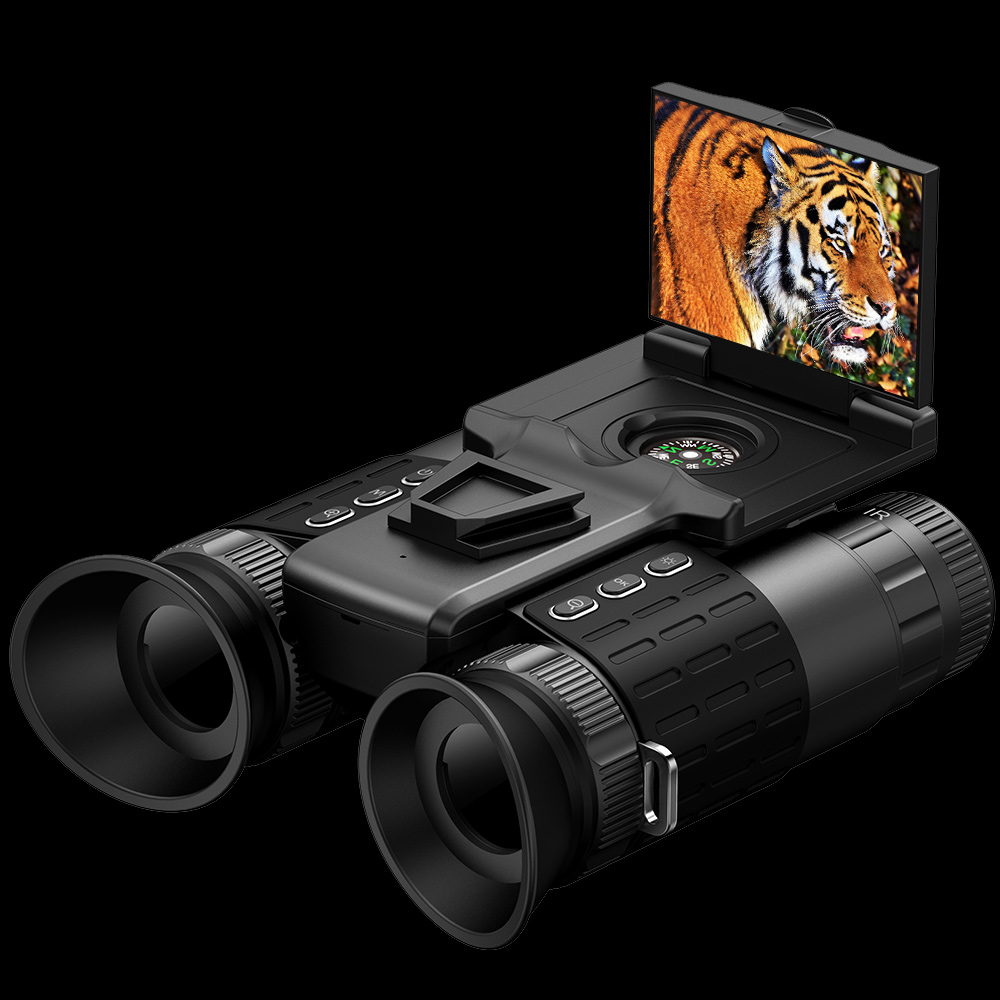
For a direct WildGuarder research path, browse the night vision binocular range and compare information for the WG4900 and WG5600 against your sightline checklist. These links do not promise a particular identification distance or establish a ranked winner.
Ask WildGuarder product support about any remaining requirement and read the return policy before ordering. Check current availability and delivery details directly rather than assuming a product page guarantees arrival before your trip.
WildGuarder also provides night vision goggles, range finders, trail cameras, thermal imagers, and solar panel accessories. If unattended recording or distance measurement is the real need, investigate that separate role. Do not expect an accessory or category change to turn an unsupported detail claim into a reliable one.
FAQ
Which specifications matter least when shopping for digital night vision binoculars for camping?
Specifications that do not help your particular campsite view should receive less weight. Extreme digital enlargement or large recording dimensions may be less important than focus, controls, and power. A practical supported setup is more useful than maximizing every number.
What does 'starlight sensor' mean on digital night vision binoculars?
It usually expresses a low-light capability claim, but the wording alone is not a comparable performance measurement. Ask for evidence and operating conditions. It does not guarantee detailed viewing in every dark scene or remove the need for approved power.
What is a reasonable battery runtime for digital night vision binoculars?
Reasonable means enough for your actual powered workload with margin, not one number for all devices. Ask whether recording and illumination were active during the quoted test. Include waiting and review time when comparing the claim with your evening.
Is it safe to look at the sun through digital night vision binoculars?
No. Do not use the sun to test a digital viewer or assume an electronic display makes solar viewing appropriate. Follow the exact bright-light precautions and keep the equipment directed away from intense sources. Use only purpose-designed, properly specified solar equipment for solar observation.
What compromises should I expect from cheaper digital night vision binoculars for camping?
Possible compromises include low-light detail, handling, documentation, and capture convenience. They vary by model. A cheaper viewer can suit a limited campsite task, but it should still have clear instructions and evidence for the feature you need.
Which features are worth paying more for in digital night vision binoculars for farm and ranch observation?
Pay for functions that demonstrably improve the ranch task: useful detail from your viewpoint, manageable controls, appropriate power, and recording if required. Do not infer a benefit from a premium label or purchase an accessory without a confirmed purpose.
What should beginners avoid when buying digital night vision binoculars for farm and ranch observation?
Avoid choosing from an unexplained range claim, confusing digital zoom with new captured detail, or assuming universal weather protection. Keep the exact model and complete setup clear. Begin with one practical observation task rather than expecting one viewer to solve every need.
Which specifications matter least when shopping for digital night vision binoculars for bird and owl watching?
Headline magnification or file-size numbers may be less useful than evidence of small-subject detail and comfortable focusing. Birds among foliage can be difficult to interpret at distance. Do not reduce responsible wildlife spacing to compensate for an equipment limitation.
Conclusion
Turn binoculars where to buy research into questions a seller can answer about your actual campsite. Compare close focus, middle-distance context, distant uncertainty, and the complete power routine. Use WildGuarder Official Store information to investigate a suitable option, and buy for documented usefulness rather than a promised maximum distance alone.
Related Reading
- How to Use for Camping IR Night Vision Binoculars for Family Camping?
- How to Use for Hunting Night Binoculars for Sale for Family Camping?
- Night Vision Binoculars for Sale Battery Life Explained: What to Expect Before You Buy
- How to Use Goggles Night Vision for Backcountry Camping
- Night Goggles Vision vs Night Vision Monoculars: Which Is Better for Backcountry Camping?
- How to Choose Monoculars for Backcountry Camping
- Monocular Night Vision: Real-World IR Range for Backcountry Camping
- How to Choose Best Binoculars with Camera for Camping
- Night Vision Binocular IR Range Explained: How to Read Real-World Limits
- Top 10 Things You Need to Know About Night Vision Binoculars


 Night Vision Binoculars


 Night Vision Goggles


 Night Vision Monoculars


 Long Range
 With Rangefinder
 Full Color
 Head-Mounted
 Large Screen
 WiFi App
 3D Naked Eye
 Multi-Color
 Flashlight
 Compact Size
 Thermal Imaging Monoculars

 Trail Cameras


 Rangefinder Binoculars


 Rangefinder with Night Vision


 Spotting Scope

 Monoculars

 Digital Binoculars Cameras


 Time Lapse Cameras


