


Military Grade Night Vision Binoculars: Real-World IR Range for Outdoor Adventure

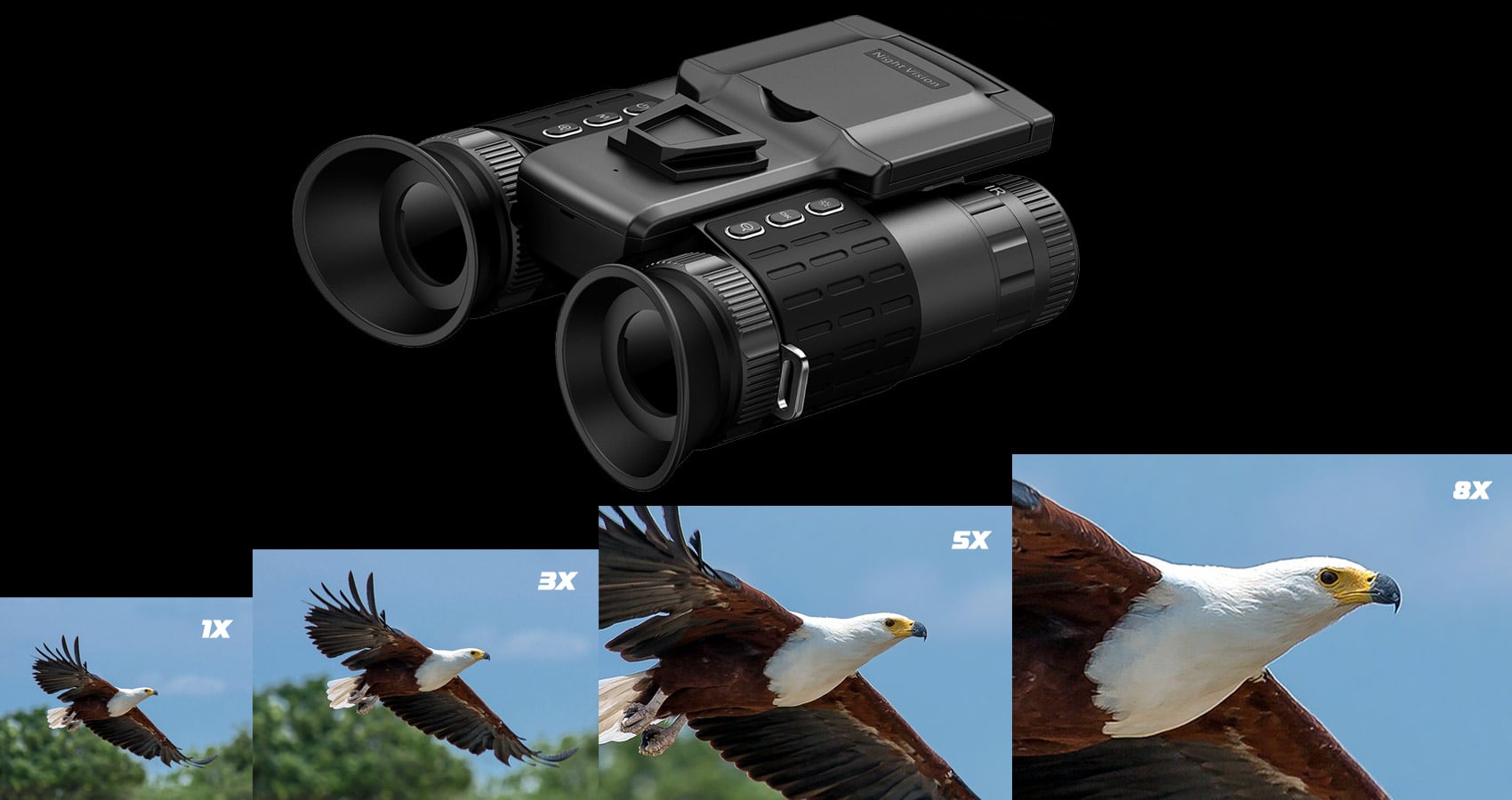
Quick Answer
When a listing describes military grade night vision binoculars, ask what the phrase means for that exact product. The wording alone does not establish certification, durability, or a dependable viewing distance. For outdoor adventure, judge IR range by demonstrated scene detail under stated conditions, then check handling, power, environmental limits, and support. A birdwatcher needs a usable, responsibly obtained view, not an impressive label with no supporting information.
Key Takeaways
- Separate wording from evidence: a strong adjective is not a named test result.
- Ask what range means: detection, recognition, and detailed identification are different outcomes.
- Check the exact model: evidence for another product does not establish this one’s capability.
- Do not infer weather protection: request the stated rating and operating limits.
- Protect the outing: a shorter, clearer observation is better than pushing uncertain equipment into unsafe use.
IR Range Begins with the Image, Not the Label
For a digital viewer with an infrared illuminator, useful range depends on light reaching the scene and returning to the sensor with enough information for your task. The resulting view also depends on focus, subject contrast, motion, and the position of nearby objects. A large advertised distance cannot describe all of those conditions at once.
Ask a seller to distinguish three statements: something was detected, a general object type was recognized, or a specific identifying feature was resolved. A small bright shape may support only the first statement. Enlarging that shape on a display does not necessarily add the missing feature needed for the third.
For birdwatching, foliage, a changing perch, and small visible features can make the task demanding. Do not treat a demonstration of a large static object as proof of distant bird identification. The relevant question is whether the equipment produces the evidence you need without approaching or disturbing the subject.
Definition: What Does Military Grade Mean Here?
Military grade night vision binoculars is a search phrase that can appear in consumer shopping and marketing. Without a specific standard, test scope, result, and model identification, it does not tell a buyer how a device was evaluated. This guide uses the phrase to examine a purchasing claim, not to classify WildGuarder products as military-certified equipment.
A useful evidence record identifies the product, the claimed requirement, the conditions, and the supporting document. If a seller names a standard, ask which relevant test was performed and whether the supplied record applies to the version being sold. Do not substitute a logo, product color, or rugged-looking housing for that record.
Compare Documented Capability with Unsupported Wording
One listing may use forceful language but provide no operating manual. Another may describe a more modest viewing task and clearly explain its limits. The second gives you more usable information, even if its headline sounds less dramatic. A claim becomes valuable when you can connect it to your own requirements.
Ingress protection is a separate example. IEC 60529 concerns the IP classification of enclosure protection. A general reference to the standard does not certify a particular viewer. Ask for the exact product rating and instructions, and do not translate a stated water-protection claim into unrestricted immersion or use in every condition.
Performance-Factor Table
| Factor | Evidence worth requesting | What not to assume | Effect on an outing |
|---|---|---|---|
| IR viewing distance | Target, scene conditions, and the visible detail | Maximum range means species identification | Sets realistic observation expectations |
| Focus and enlargement | Ordinary-view samples and control instructions | More digital zoom creates new detail | Affects how confidently you interpret a subject |
| Environmental protection | Model-specific rating and care limits | Rugged styling proves resistance | Determines when to protect or pack away equipment |
| Power | Approved charging method and runtime conditions | Every battery or solar accessory is compatible | Helps plan a practical session length |
| Recording | Original files, supported media, and transfer steps | A large file-resolution label proves clear detail | Determines whether a sighting can be reviewed usefully |
| Support | Accessible documentation and written answers | A confident sales phrase replaces assistance | Reduces uncertainty before and after purchase |
A Birdwatcher’s Evening at a Familiar Viewpoint
Consider an observer arriving before dusk with a known route back. In the remaining daylight, they identify stable landmarks and choose a position that does not obstruct others. As the light fades, they want to observe movement near a distant treeline, not force an identification from an indistinct image.
The observer can assess handling and basic settings on an ordinary stationary object first. If the view later becomes ambiguous, they note the uncertainty rather than moving toward a resting bird. The NPS advice on watching wildlife is a useful reminder to make the animal’s space part of the plan.
This scenario creates a clearer shopping requirement than a label does: manageable controls, enough useful scene detail, appropriate power, and documented environmental limits. It also makes a stopping rule possible. If conditions or equipment no longer support the observation, end the session rather than allowing curiosity to decide the route.
Use the Equipment Within Its Documented Limits
Before leaving
Check the manual, approved power arrangement, storage space, and protective case. Learn the controls before darkness makes unfamiliar buttons frustrating. Inspect lenses without touching their surfaces, and follow the specified cleaning method. Do not open the housing or improvise an electrical modification to chase a larger range figure.
At the observation point
Stop walking before raising the viewer. Start with a stable, focused view and use only settings the manual supports. If a near object dominates the image, reconsider the viewpoint without crossing unsafe ground or moving closer to wildlife. Keep a separate light available for ordinary movement.
When conditions change
Dust, moisture, poor footing, and a tiring grip can each justify packing away. A product’s presence in an outdoor category is not permission to ignore its operating limits. Make the decision from the actual conditions and documentation, not from the phrase that first attracted you to the listing.
A Practical Product and Supplier Check
Use the WildGuarder night vision binocular range to identify candidates, then compare individual information for the WG9680 and WG9710 where their listed functions fit your task. These links provide product paths, not a claim that either model carries a military certification.
Send unresolved questions to WildGuarder product support and review the store return terms. Ask about the particular version, included items, and instructions before ordering. Keep answers specific enough that you can tell whether a requirement has actually been met.
WildGuarder also offers outdoor categories such as night vision goggles, range finders, trail cameras, thermal imagers, and solar panel accessories. Choose each for its documented role. A trail camera may suit unattended observation, while a thermal imager answers a different imaging question; a shared brand name does not make either a substitute for the binocular view you need.
FAQ
How do I choose digital night vision binoculars for wildlife watching?
Define your viewpoint, expected subjects, and the detail you need to recognize. Compare clear examples, handling, power, and relevant operating limits. Include responsible distance from wildlife in the requirement. The device should fit the observation rather than encourage you to approach for a better result.
Can night vision binoculars work in a dusty desert environment?
Only within the exact model’s stated environmental limits. Dust can affect exposed surfaces and handling, so use appropriate protection and follow the cleaning instructions. Do not infer dust resistance from a rugged appearance. Ask the seller for model-specific information before planning that environment.
Can I focus the IR beam on night vision binoculars?
Some devices offer an adjustable illuminator, while others do not. Check the manual for the actual control and its purpose. Do not turn an unmarked component or disassemble the illuminator. An adjustment, where supported, is still not a guarantee of longer useful identification distance.
Can beginners use digital night vision binoculars?
Yes, when they learn the controls and use the device within its instructions. Begin from a safe stationary position with a familiar scene. Practice focusing and lowering the viewer before moving. Simple, documented operation can be more helpful to a beginner than extra modes.
How far can night vision binoculars identify a hog?
No single distance is reliable across devices and conditions. Identification requires sufficient distinguishing detail, not merely an animal-shaped patch. Keep a safe distance and do not approach a potentially dangerous animal to test equipment. Leave the identification uncertain when the image does not support it.
What does 'starlight sensor' mean on digital night vision binoculars?
It generally signals a claim about low-light sensitivity, but the phrase alone gives no comparable performance result. Ask what sensor information and scene examples support it. Do not assume it means thermal imaging, a particular intensifier technology, or operation without usable light in every situation.
How far is realistic for property observation with digital night vision binoculars?
Use the distance between your authorized observation point and the specific feature you need to see. Ask for comparable evidence, and separate noticing movement from recognizing details. A viewer can assist observation, but it should not be treated as a complete property-security system.
Which specifications matter least when shopping for digital night vision binoculars for bird and owl watching?
Figures that do not connect to your task deserve less weight. Very large digital enlargement and recording-size labels can distract from focus, useful detail, and handling. For birds and owls, consider responsible observation and scene conditions before paying for features you may not use.
Conclusion
Military grade night vision binoculars should prompt better questions, not automatic confidence. Look for model-specific evidence, realistic IR expectations, and an outdoor routine that respects wildlife. Explore the relevant WildGuarder Official Store options when those requirements are clear, and choose a product for the view it can support rather than the force of its marketing language.
Related Reading
- How to Choose Infrared Binoculars for Deer Hunting
- Infrared Night Binoculars Compared: A Practical Side-by-Side Guide
- Infrared Night Vision Binoculars: Real-World IR Range for Deer Hunting
- Can You Use Best Infrared Binoculars for Farm Monitoring?
- Night Time Vision Binoculars vs Night Vision Goggles: Which Is Better for Backyard Wildlife Watching?
- Night Vision Binocular IR Range Explained: How to Read Real-World Limits
- Understanding Night Sight Binoculars: What to Look For Before You Buy
- Binoculars and Night Vision Value Guide: Features That Matter Most
- Top 10 Things You Need to Know About Night Vision Binoculars
- Why Binoculars with Night Vision Infrared Glow Is Misunderstood: Common Causes and Practical Fixes


 Night Vision Binoculars


 Night Vision Goggles


 Night Vision Monoculars


 Long Range
 With Rangefinder
 Full Color
 Head-Mounted
 Large Screen
 WiFi App
 3D Naked Eye
 Multi-Color
 Flashlight
 Compact Size
 Thermal Imaging Monoculars

 Trail Cameras


 Rangefinder Binoculars


 Rangefinder with Night Vision


 Spotting Scope

 Monoculars

 Digital Binoculars Cameras


 Time Lapse Cameras


