


What to Look for in Day and Night Time Binoculars: What Outdoor Users Should Know

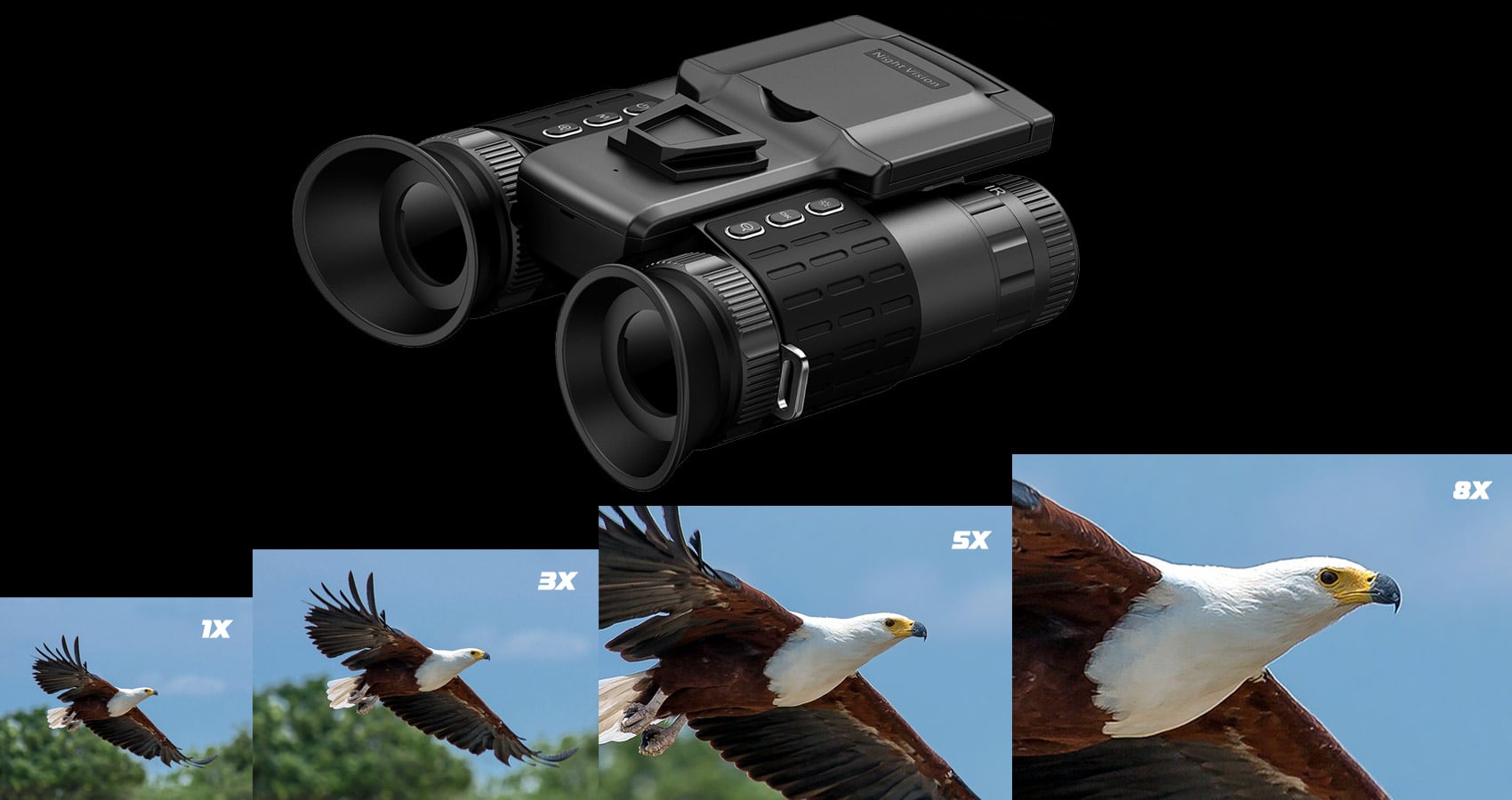
Quick Answer
Choose day and night time binoculars by the detail they show in each intended lighting condition, not by a day-and-night label or a large photo-size number. Check focusing, viewing comfort, supported modes, original recordings, and power. For a birdwatcher camping overnight, useful contrast and responsible observation matter more than making a distant subject look large on a display. An unclear image should remain an uncertain sighting.
Definition: Image Clarity Is More Than File Size
Clarity means that the feature needed for the task can be distinguished. It depends on the scene and the complete imaging process, including optics, focus, light, movement, and presentation. A file’s pixel dimensions tell you its size, not whether it contains a recognizable feather pattern or another identifying feature.
Interpolated output uses processing to produce a larger pixel grid from available image information. That can change presentation, but it does not prove additional scene detail was captured. Ask what a stated photo resolution describes and inspect an original example rather than equating the largest output number with the sharpest useful image.
Day and night capability also needs clarification. A digital product may have supported modes for different conditions, while ordinary binoculars depend on available light. The terms should lead to operating instructions and relevant examples, not an expectation that every scene remains equally clear after sunset.
A Birdwatcher’s Evening at Camp
A birdwatcher arrives before dusk and observes from a familiar permitted place. In daylight, a distant bird’s posture is easy to follow. Later, the background darkens and small details become harder to separate. The observer wants to keep a record but does not want to approach or disturb the animal.
The important transition is not simply from visible to invisible. The image may continue to show a shape after the identifying features disappear. A sensible record can say that activity was observed without attaching a confident species label. A larger saved file does not remove that uncertainty.
During an overnight camp, the observer also has practical constraints: carrying weight, approved power, storage space, and time for packing away. A device that handles those needs comfortably may be more useful than a more complicated product whose headline specification is stronger.
Key Takeaways
- Define the feature that would make the observation useful.
- Check day and night samples separately.
- Separate captured detail from interpolated output dimensions.
- Use focusing and stable handling before judging enlargement.
- Keep wildlife distance, safe movement, and equipment care part of the routine.
Four Checks for a Clearer Decision
Contrast: can the subject be separated from its background?
A subject against an open scene is different from one partly hidden among leaves. Ask whether a product example resembles the background you will encounter. Do not compare a simple demonstration with a difficult real scene and attribute the entire difference to the device.
Focus: is the scene adjustment correct?
Read the manual for each focus or viewing control. A comfortable display appearance does not necessarily mean the subject is correctly focused. Practice on an ordinary permitted stationary object and check whether the saved result, where supported, retains the feature you intended.
Capture: what does the original file contain?
Review an unedited sample through the supported transfer method. Look for the needed characteristic at a sensible viewing size. Excessive enlargement can exaggerate softness without settling the identification. Keep the original if you later crop or adjust a copy for easier review.
Handling: can you maintain the view comfortably?
A tiring grip or awkward posture can make the experience less useful even when a short demonstration looks good. Test the controls from a stable position, and use only a documented support arrangement if needed. Consider the full carrying setup, including case and approved power accessories.
Ask the Supplier for the Missing Context
Request the exact model’s operating description, original examples, and clarification of recording-size claims. Ask which day and night modes are supported and whether the sample represents the mode you will actually use. Unanswered questions should remain visible on the shortlist rather than being filled with assumptions.
WildGuarder’s night vision binocular category offers one route for exploring digital options. Review the WG5600 and WG6000 information against your own image and handling requirements. These links are not a field-test ranking or a claim that the two devices produce identical results.
Use WildGuarder product support for mode, sample, and accessory questions, and review the return terms before planning an evaluation. Check current included items and ordering details directly. A product image does not establish weather capability or the contents of every offer.
Day-to-Night Image Checklist
| Check | Daylight question | Nighttime question |
|---|---|---|
| Useful feature | Can you distinguish the detail needed without excessive enlargement? | Does that detail remain visible, or only the outline? |
| Mode | Are the supported day settings understood? | Are night settings and illumination used as instructed? |
| Focus | Can you set the scene comfortably? | Can you repeat the adjustment on a suitable stationary reference? |
| Recording | Does the original file preserve the intended feature? | Does the file contain useful information rather than only brightness? |
| Power | Is the system prepared by the approved method? | Does the actual workload fit the planned session? |
| Carrying | Is the complete kit manageable? | Can it be stowed safely before moving? |
Make the Limits Part of Good Field Use
Keep a responsible observation distance. The NPS wildlife-watching guidance is a useful reference for giving animals space. A closer position should not be used to conceal a disappointing equipment result. Avoid turning a planned quiet observation into an attempt to provoke movement for a recording.
Bright screens and lights can affect natural night vision; the NPS dark-adaptation explanation provides context. Use supported display adjustments, but retain adequate ordinary lighting for your return and campsite tasks. Lower the viewer before walking or handling other equipment.
If external moisture or dirt affects the view, stop and follow the cleaning instructions. Do not assume eyeglass cleaner, a rough cloth, or an improvised heating method is appropriate. An image-quality problem should not become a maintenance problem through an unsupported fix.
WildGuarder also has night vision goggles, range finders, trail cameras, thermal imagers, and solar panel accessories. These products answer different questions, such as unattended recording or distance measurement. Add them only for a defined role and confirm compatibility instead of expecting another category to repair missing image detail.
FAQ
What compromises should I expect from cheaper digital night vision binoculars for camping?
Trade-offs may involve low-light detail, controls, documentation, or recording convenience, depending on the model. Assess a relevant sample and complete camp routine. A cheaper product can still be useful when expectations are specific and its essential functions are supported.
What is interpolated photo resolution on night vision binoculars?
It is an output size created through processing rather than proof that the sensor captured that many independent scene details. Ask the supplier to distinguish native capture and processed output. Compare original images for the feature you need instead of choosing by the largest dimension.
Should I buy digital night vision binoculars with a built-in rechargeable battery or replaceable batteries?
Choose the approved power arrangement that fits your preparation and trip. Built-in and replaceable systems each have practical considerations. Confirm the exact battery and charging instructions, and do not treat physically similar cells or connectors as interchangeable.
Is it safe to look toward bright lights through digital night vision binoculars?
Do not deliberately aim at intense sources to test the device. Follow its bright-light precautions and turn away or lower it when necessary. An electronic view should not be treated as unrestricted protection or permission for solar observation.
What do users need to know about carrying heavy night vision binoculars?
Assess the complete load and use a carrying method approved for the device. An unsuitable strap or awkward case can make longer use tiring. Stow the viewer before moving across difficult ground rather than holding it at your eyes while walking.
What does 'starlight sensor' mean on digital night vision binoculars?
It suggests a low-light capability claim, but it does not define the whole image result. Ask for relevant evidence and conditions. It should not be interpreted as guaranteed color, thermal operation, or detailed visibility in every near-dark scene.
Which specifications matter least when shopping for digital night vision binoculars for bird and owl watching?
Large magnification and recording-size labels may matter less than small-subject detail, focus, and stable handling. A useful birdwatching comparison asks whether the needed characteristic is actually visible. Keep uncertainty explicit when it is not.
What compromises should I expect from cheaper digital night vision binoculars for bird and owl watching?
A cheaper viewer may suit noticing activity while struggling with small features or difficult backgrounds. The exact compromise needs a relevant sample. Do not compensate by approaching a resting bird, and avoid turning an uncertain outline into a definite identification.
Conclusion
Good day and night time binoculars choices begin with useful detail, not output size alone. Compare focus, original recordings, comfort, and the transition into darkness as separate questions. Use WildGuarder Official Store documentation to investigate a suitable setup for a responsible overnight observation routine.
Related Reading
- How to Choose Infrared Binoculars for Deer Hunting
- Infrared Night Binoculars Compared: A Practical Side-by-Side Guide
- Infrared Night Vision Binoculars: Real-World IR Range for Deer Hunting
- Can You Use Best Infrared Binoculars for Farm Monitoring?
- Night Time Vision Binoculars vs Night Vision Goggles: Which Is Better for Backyard Wildlife Watching?
- Night Vision Binocular IR Range Explained: How to Read Real-World Limits
- Understanding Night Sight Binoculars: What to Look For Before You Buy
- Binoculars and Night Vision Value Guide: Features That Matter Most
- Top 10 Things You Need to Know About Night Vision Binoculars
- Why Binoculars with Night Vision Infrared Glow Is Misunderstood: Common Causes and Practical Fixes


 Night Vision Binoculars


 Night Vision Goggles


 Night Vision Monoculars


 Long Range
 With Rangefinder
 Full Color
 Head-Mounted
 Large Screen
 WiFi App
 3D Naked Eye
 Multi-Color
 Flashlight
 Compact Size
 Thermal Imaging Monoculars

 Trail Cameras


 Rangefinder Binoculars


 Rangefinder with Night Vision


 Spotting Scope

 Monoculars

 Digital Binoculars Cameras


 Time Lapse Cameras


