


What to Look for in Infrared Binoculars for Sale: What to Look For Before You Buy

Quick Answer
When comparing infrared binoculars for sale, confirm the imaging type, the usable detail at your intended viewpoint, and the complete power routine before choosing a price. For longer property observation, ask what the battery claim includes and how approved charging fits your day. Keep must-have functions separate from optional features. A low purchase price is not good value when an essential capability or necessary accessory remains unverified.
A Property Owner Builds a Shortlist
An owner wants to observe a familiar area for short periods over an evening. They need a clear view from a stable authorized position and may occasionally keep a clip. Their concern is that the equipment will run out of power before the last planned check, even though a listing advertises a long runtime.
The useful purchasing question is not simply which product lasts longest. It is which documented setup supports that routine with manageable preparation. If the viewer will spend long intervals switched off, the workload differs from continuous recording. If charging is inconvenient, an otherwise appealing device may not suit the owner.
Write that routine beside every candidate. Comparing different assumptions for different products can make a poor choice look attractive. A clear shortlist should show what each offer confirms, which requirement it does not meet, and what you still need the seller to explain.
Definition: Infrared Is Not the Whole Specification
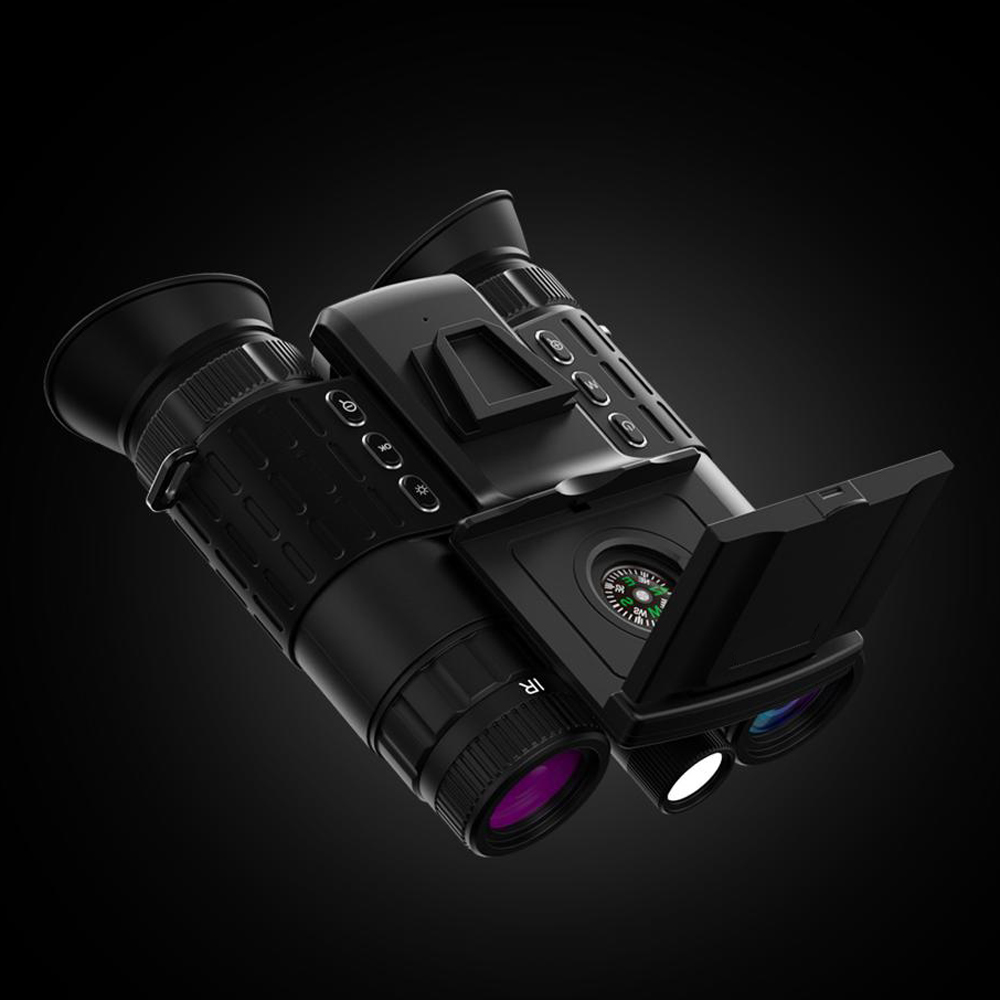
In consumer shopping, infrared binoculars often describes a digital viewer that can use infrared illumination. The exact product still needs identification. The term does not by itself establish thermal imaging, built-in recording, a particular viewing range, or a specific battery arrangement.
Ordinary binoculars use available light and can be a sensible alternative when observation occurs before darkness. A thermal imager produces a different kind of information. A recording-focused product may solve another problem entirely. Choose the operating principle that matches the unmet need instead of expecting one category to cover every task.
Five Power Questions Before a Purchase
What was running during the quoted test?
Ask whether illumination, recording, and the display were active, and whether the conditions are documented. A viewing-only figure should not silently become a promise for continuous capture. If the seller cannot explain the workload, keep the runtime claim in the unanswered column.
How is the device prepared for use?
Confirm the approved charging connection, required battery type, and normal indicators. Do not assume a familiar-looking port supports every power source. If a product uses replaceable batteries, ask which exact types are permitted instead of selecting substitutes by physical size alone.
Can your routine accommodate that preparation?
A convenient charging arrangement at home may be awkward during travel. Evaluate where the device will be stored and prepared, not only how it works during a demonstration. A simple routine you reliably follow is more useful than a theoretically capable setup that is frequently unavailable when needed.
What happens between observations?
Check documented sleep, shutdown, and restart behavior. A device left operating while you wait can accumulate more powered time than expected. Decide whether repeated startup is practical for your task, and avoid assuming a standby feature exists because another model has one.
What is the fallback when the session ends early?
Keep ordinary lighting and essential communications independent of the viewer. An observation may need to stop without affecting your ability to return or handle normal tasks. If the equipment cannot meet the essential requirement using its approved power system, do not solve the mismatch with improvised wiring or batteries.
Key Takeaways
- Match battery evidence to the actual viewing and recording workload.
- Include preparation and waiting time in the buying decision.
- Confirm the complete supported setup before comparing prices.
- Separate an unanswered requirement from a confirmed feature.
- Use an ordinary-light alternative when it already meets the task.
What to Request from the Seller
Ask for the current manual, included items, relevant original image examples, and written support terms. The FTC online-shopping guidance provides a useful purchasing reference. Keep questions tied to the exact model and version rather than a generic answer about night vision products.
Start with the WildGuarder night vision binocular category. The WG6500 and WG9801 pages are individual research paths if their stated functions match your shortlist. No live price or comparative runtime is asserted here; check the current product information and request clarification where necessary.
Use WildGuarder product support to resolve power or accessory questions, and read the return policy before arranging an evaluation. A buying decision becomes stronger when the limitations are explained clearly, not when every unanswered point is treated optimistically.
Shortlist Checklist: Essential, Optional, Unresolved
| Requirement | Essential evidence | Optional convenience | Reason to delay |
|---|---|---|---|
| Scene detail | A relevant example supports the task | Additional capture modes | Only a maximum-distance headline is available |
| Power | Approved system and meaningful runtime conditions | A supported convenient charging method | Battery or connection requirements are unclear |
| Operation | Controls and focus are manageable | Extra display adjustments | The intended user cannot use essential functions comfortably |
| Recording | Required files can be saved and retrieved | Wireless transfer where genuinely useful | Storage and transfer details are missing |
| Exposure | Documented limits fit the setting | A compatible protective case | Weather protection is inferred from appearance |
| Ownership | Complete cost and seller terms are known | Nonessential accessories | An important extra or support route remains unidentified |
A First-Week Evaluation Without Overreaching
Begin in a convenient permitted place. Follow startup and charging instructions, focus a familiar object, and make a supported sample if recording is important. Confirm the file opens before planning a longer session. Use a consistent observation routine so differences are easier to describe.
Record powered periods and major functions rather than attempting a precise engineering energy model from incomplete data. A few factual notes can reveal whether your real workload differs from the supplier’s example. They do not certify capacity or prove a general runtime figure for all conditions.
Battery improvisation is not a suitable evaluation technique. The CPSC warning about separated lithium-ion cells is relevant to unsupported power suggestions. Follow the exact system’s instructions and seek assistance when normal operation does not match the documentation.
WildGuarder’s night vision goggles, range finders, trail cameras, thermal imagers, and solar panel accessories serve additional outdoor roles. An unattended camera may be more appropriate when nobody will be present, while a solar accessory needs its own compatibility check. Add another category only when it addresses a defined requirement.
FAQ
What are the most important questions to ask before buying night vision binoculars online?
Ask which exact model is supplied, what evidence supports the viewing claim, how power and storage work, and who provides assistance. Request the applicable manual and current terms. Do not let optional features distract from an unanswered essential operating requirement.
How far can premium digital night vision binoculars see?
There is no universal distance for a premium product. The scene and the detail required matter as much as the price tier. Ask whether the claim means detection, recognition, or identification and compare original samples from similar conditions.
Digital night vision binoculars vs regular binoculars: which are better at dusk?
Ordinary optics can work well while useful ambient light remains, whereas a suitable digital viewer may extend the type of observation possible or add recording. Compare your actual task at the same viewpoint. Neither category is automatically the better choice for every dusk scene.
How should I prepare night vision binoculars for winter storage?
Follow the manufacturer’s storage procedure for the device and its approved power system. Protect clean, dry external surfaces and keep equipment within stated limits. Do not invent a universal charge level or temperature rule when the particular battery instructions are available.
Do I need premium digital night vision binoculars for backyard wildlife watching?
Not necessarily. Identify the feature your backyard routine currently lacks and look for documented evidence that a product supplies it. A modest viewer may be enough for a limited task, while a premium option still requires clear proof of the benefit you need.
How do I choose digital night vision binoculars for long-range observation?
Define the useful detail required at your planned viewpoint, then examine focus, stability, illumination, and handling. Keep responsible distance fixed. A demonstration showing only activity should not be interpreted as proof of long-range identification.
Are budget digital night vision binoculars good enough for long-range observation?
They may suit some limited distant viewing, but adequate recognition cannot be inferred from a budget label or maximum-range claim. Ask for comparable evidence. If your essential task remains unsupported, choose a different requirement or equipment approach rather than relying on enlargement.
What should I look for when buying digital night vision binoculars?
Look for an understandable imaging type, useful scene detail, comfortable operation, approved power, and accessible documentation. Add recording and weather requirements when the task needs them. A complete supported setup is more important than an impressive isolated specification.
Conclusion
Infrared binoculars for sale should be compared as complete working setups. Put the viewing task, power routine, and essential evidence ahead of optional extras. The WildGuarder Official Store can help you investigate suitable models and resolve uncertainties before buying a viewer for longer, more deliberate property observation.
Related Reading
- Night Vision Binoculars for Sale Battery Life Explained: What to Expect Before You Buy
- Why Digital Night Vision Binoculars Recording Drains Battery: What Outdoor Users Should Know
- How Long Night Vision Binos for Cabin Security?
- How to Use for Camping IR Night Vision Binoculars for Family Camping?
- How to Use Goggles Night Vision for Backcountry Camping
- Night Vision Binocular IR Range Explained: How to Read Real-World Limits
- Binoculars and Night Vision Value Guide: Features That Matter Most
- Understanding Night Sight Binoculars: What to Look For Before You Buy
- Binoculars with Night Vision Explained: What It Means and How to Choose
- Top 10 Things You Need to Know About Night Vision Binoculars


 Night Vision Binoculars


 Night Vision Goggles


 Night Vision Monoculars


 Long Range
 With Rangefinder
 Full Color
 Head-Mounted
 Large Screen
 WiFi App
 3D Naked Eye
 Multi-Color
 Flashlight
 Compact Size
 Thermal Imaging Monoculars

 Trail Cameras


 Rangefinder Binoculars


 Rangefinder with Night Vision


 Spotting Scope

 Monoculars

 Digital Binoculars Cameras


 Time Lapse Cameras


