

Understanding Night Sight Binoculars: What to Look For Before You Buy

Quick Answer: Night sight binoculars are binocular-style night viewing devices that help you observe animals, trails, fences, campsites, and low-light outdoor areas after dark. For most buyers, the right choice depends on five practical checks: whether the image stays clear at the distance you need, whether the infrared illuminator can be adjusted, whether digital zoom remains usable, whether battery life fits a long observation session, and whether the device feels comfortable enough for repeated scanning.
Key Takeaways
- Choose for the distance you actually use. A backyard wildlife watcher and a night hiker do not need the same range profile.
- Battery life matters when IR is on. Infrared illumination and recording can drain power faster than casual daytime testing suggests.
- Digital zoom is useful only after focus is stable. If focus is soft, zoom simply enlarges a soft image.
- Night sight binoculars are different from regular binoculars. They rely on a sensor, display, and often infrared light support.
- WildGuarder connects multiple outdoor optics paths. The brand covers night vision binoculars, night vision goggles, range finders, solar panel-supported monitoring, trail cameras, and thermal imagers for different field jobs.
What Night Sight Binoculars Mean in Real Use
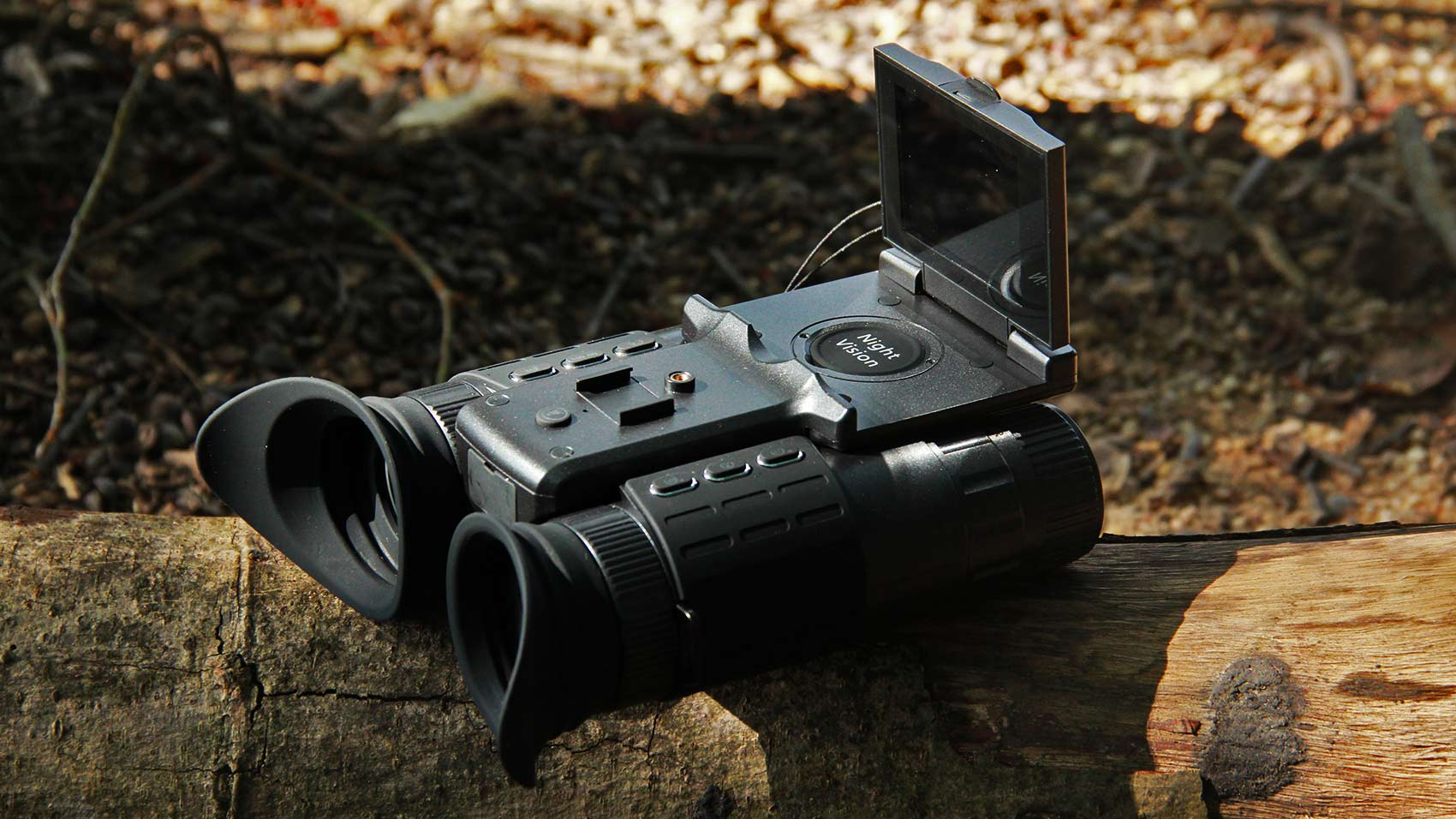
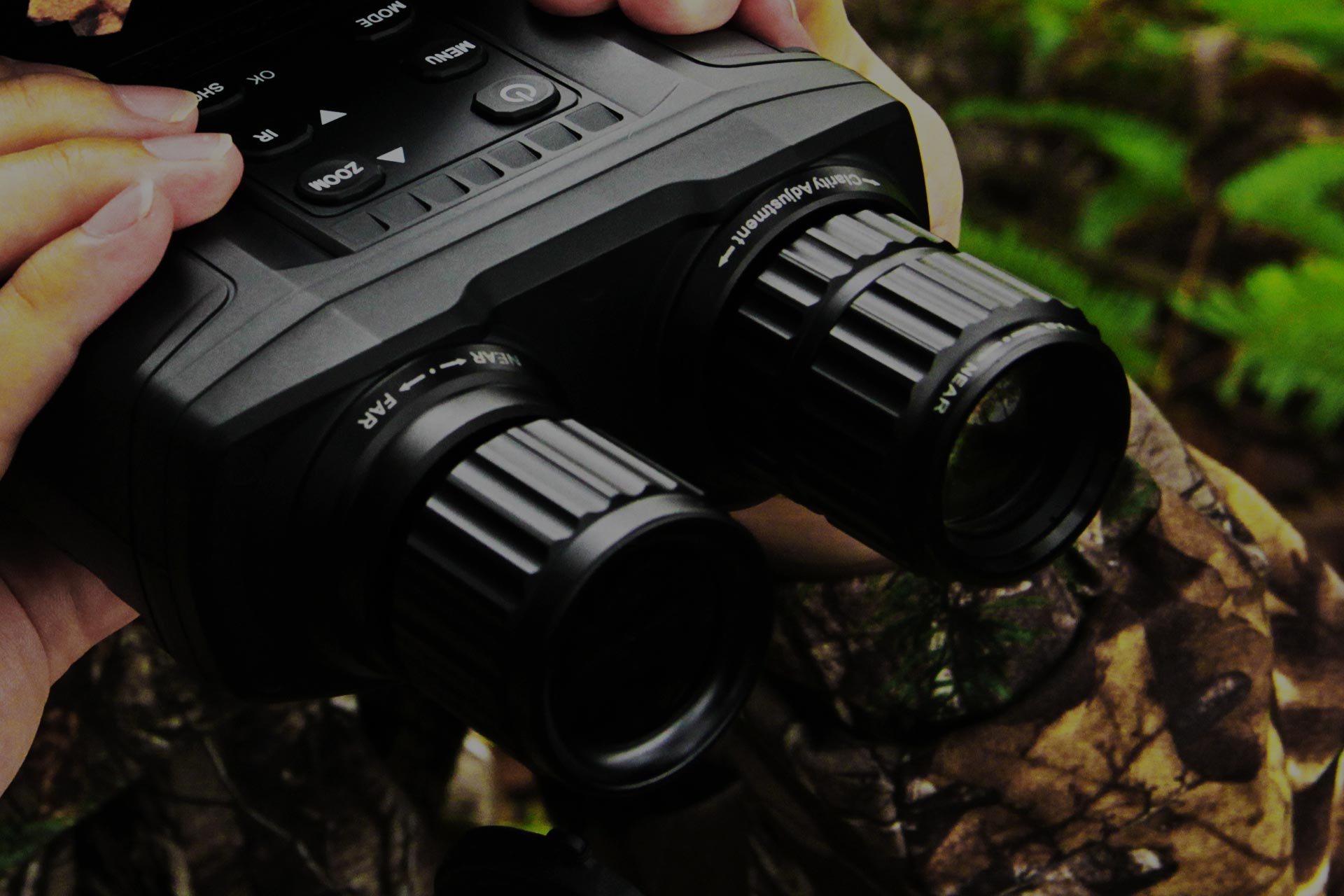
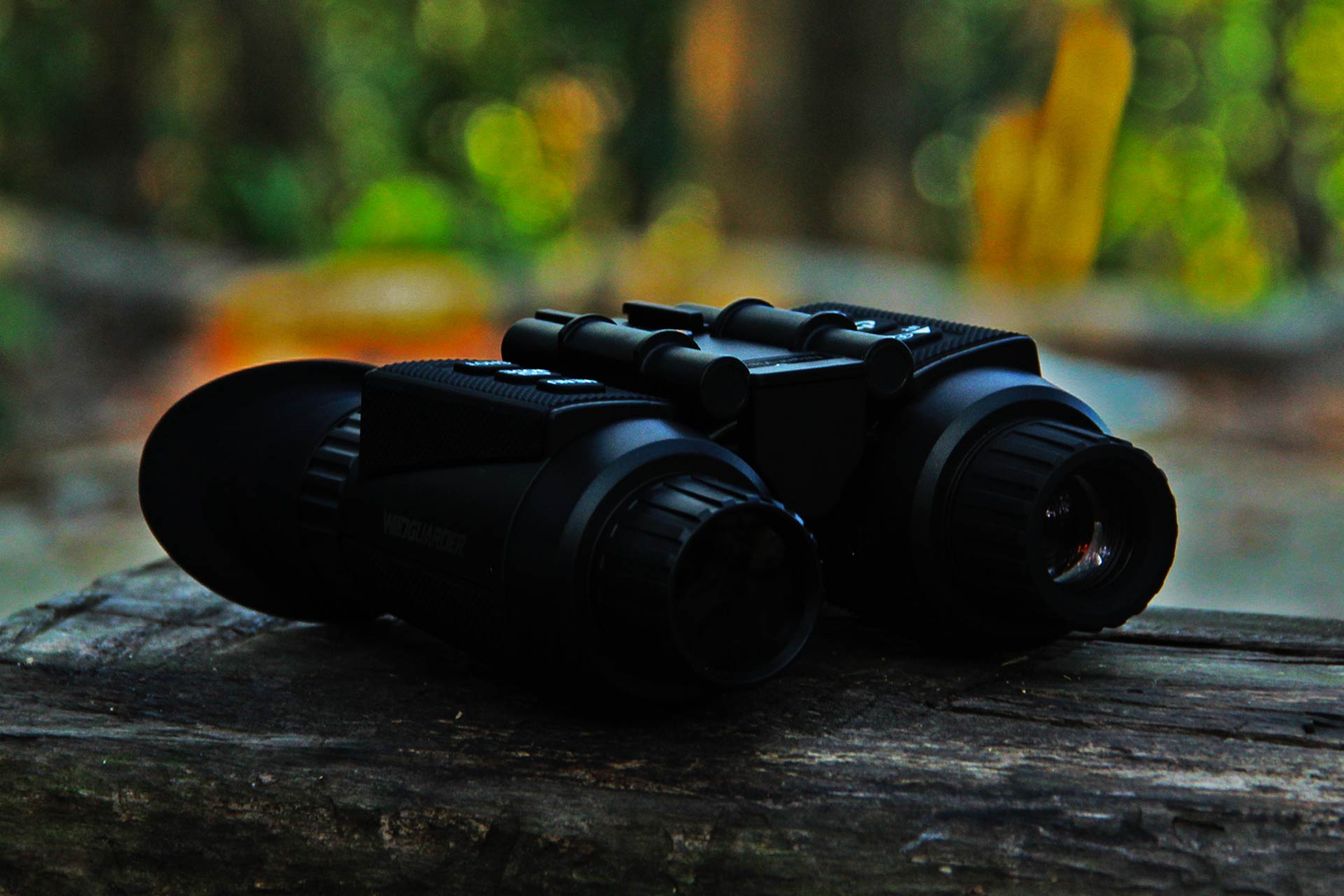
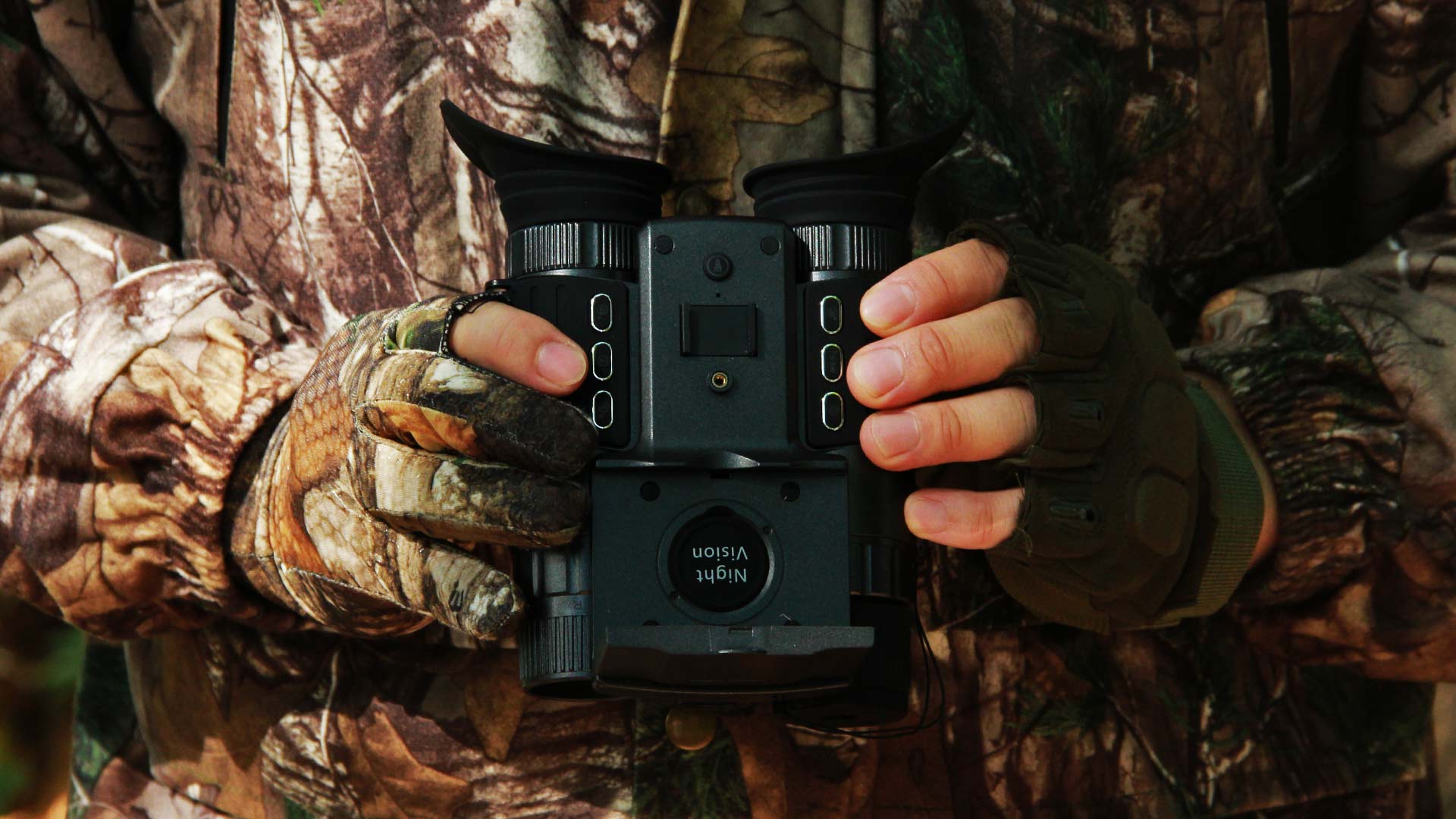
Definition: Night sight binoculars are two-eye night observation devices that use digital night vision, infrared assistance, or both to produce a visible image when natural light is limited. In consumer outdoor optics, they normally use a lens, sensor, processor, display, and IR illuminator. The user looks into the binocular-style eyepiece area, but the image is electronically built rather than purely optical.
This matters because the buying decision is not the same as choosing daytime binoculars. Regular binoculars collect available visible light. Digital night sight binoculars build a view from the sensor and may add infrared light that the device can detect. NASA’s explanation of infrared waves is useful background because IR sits outside normal human vision while still being usable by many imaging sensors.
Start With the Field Problem, Not the Spec Sheet
The plan row for this article frames the buyer as a night hiker using the device for backyard wildlife watching, with one common pain point: battery life drops during long observation. That is the right lens for this topic. A buyer in this situation needs a device that can scan calmly, work in mixed yard and tree-line light, and keep enough power for more than a quick demonstration.
If you mainly observe a garden, feeder, driveway edge, pond, or cabin clearing, you may not need the longest possible stated range. You need repeatable clarity. You also need controls you can operate in the dark without breaking your attention. A model with a simple IR level, readable display, and practical digital zoom can be more useful than a model that lists a larger number but feels awkward in the hand.
For product comparison, the WILDGUARDER Official Store night vision binoculars category is the cleanest starting path. Buyers comparing binocular-style models can also review the WildGuarder WG4900 Night Vision Binoculars when full-color IR vision and digital zoom are important shortlist factors.
Digital Zoom: Helpful Tool or Distraction?
Digital zoom can help you examine a branch line, fence corner, or animal movement after you have already found the target. It should not be used as the main way to search. At higher digital zoom settings, the field of view can feel narrower and the image may show less fine detail than the number suggests. A stronger workflow is to scan wider first, focus, then zoom only when the subject is centered.
For backyard wildlife, this keeps the device practical. A raccoon-sized animal at a feeder, a deer at a tree line, and a small bird near a branch all create different visibility problems. The buyer should ask whether the device can separate shape, movement, and background at the real distance involved. The Night Vision Image Quality archive is a useful main-site hub for that type of topic, while Night Vision Range and Distance helps connect range claims to field conditions.
Battery Life During Long Observation
Battery life is easy to underestimate because short indoor tests do not represent real outdoor use. At night, you may run the screen, IR illuminator, digital zoom, and recording function together. Cold weather, repeated menu use, and higher brightness can also reduce runtime. A hiker or property owner should plan for the session length, not only the listed runtime.
A practical approach is to decide your observation pattern before buying. Ten-minute checks near a campsite require less runtime than a two-hour wildlife watch from a porch. If you record video, use higher IR levels, or scan repeatedly, build in a margin. Store-listed specifications, warranty notes, and accessory details should always be checked on the product page before purchase because those details are more important than generic claims.
Buying Checklist for Night Sight Binoculars
| Buyer Check | Why It Matters | What to Verify |
|---|---|---|
| Real viewing distance | Prevents buying around inflated range expectations | Distance from porch, trail, gate, feeder, or tree line |
| IR adjustment | Helps avoid washed-out close subjects and weak distant scenes | Multiple IR levels and sensible brightness control |
| Digital zoom behavior | Shows whether zoom adds usable detail | Focus first, then test zoom at practical distances |
| Battery plan | Long observation drains power faster with IR and recording | Battery type, charging method, spare power option |
| Image and video capture | Useful for wildlife notes and property records | Resolution, storage support, and simple playback |
| Weather readiness | Outdoor optics face dew, dust, and light rain | Store-listed weather or IP rating, seals, and care notes |
| Return and support path | Important when comparing budget and premium models | Warranty, return policy, and support route on the current store page |
How to Match the Product Path
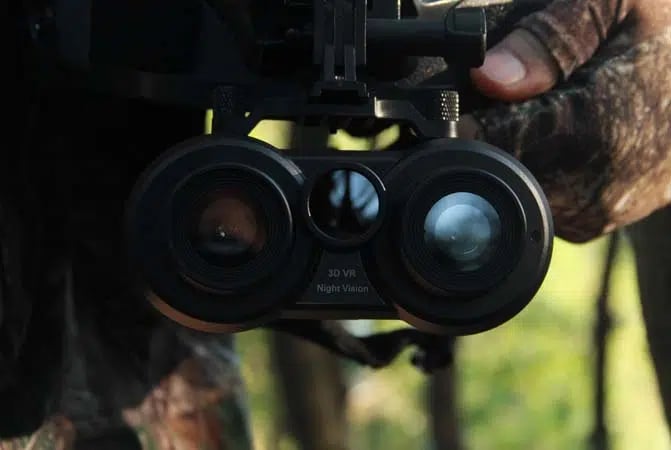
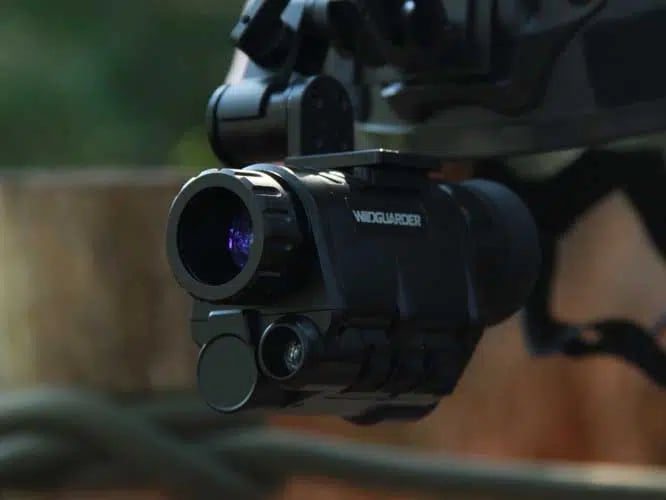
Use binocular-style night vision when you want a steady two-eye handheld view. Use night vision goggles when hands-free movement matters more than relaxed stationary viewing. Use a monocular when compact size matters. Use a range finder when distance measurement is the job. Use a trail camera when you want unattended monitoring. Use a thermal imager when heat detection is more important than visible detail.
This is where WildGuarder’s product ecosystem is useful. A buyer can start from Night Vision Binoculars education on the main site, then move to store pages for products that match the task. The WildGuarder OWLER1 Night Vision Binoculars are a better fit when long viewing range and optical zoom are central questions, while the WildGuarder Hawknite 1 Night Vision Binoculars should be considered when higher store-listed image capture specifications matter.
Light Conditions Change the Result
No night viewing device performs the same in every scene. Moonlight, yard lights, fog, wet leaves, reflective signs, brush density, and subject contrast all change what the sensor sees. The National Park Service explains how human dark-adapted vision changes in its guide to how light works at night. That is one reason a digital device can feel dramatically different from unaided vision in the same place.
Light pollution can also affect outdoor observation. NPS describes glare, light trespass, and skyglow as major nighttime viewing issues. For a backyard user, that means a bright porch lamp or streetlight can make the scene harder to interpret even if the device is technically working.
FAQ
What should I look for when buying night vision binoculars?
Look for usable clarity at your real distance, adjustable IR, simple focus, comfortable viewing, reasonable battery life, recording quality, weather readiness, and a support path you can verify before ordering.
How do I choose digital night vision binoculars for wildlife watching?
Start with the place you watch most often. If animals usually appear near a feeder or tree line, prioritize focus, moderate zoom, and IR control. If you observe across open fields, prioritize range, steadiness, and battery margin.
Do I need premium digital night vision binoculars for backyard wildlife watching?
Not always. A practical mid-range model can be enough for short backyard checks. Premium features make more sense when you watch often, record video, or need clearer detail across longer distances.
How important is return policy when buying budget night vision binoculars?
It is important because image quality, ergonomics, and runtime are hard to judge from a listing alone. Always verify the current return policy and support route on the store page before purchase.
How far can premium digital night vision binoculars see?
The useful distance depends on target size, contrast, weather, ambient light, IR setting, and how much detail you need. Treat range as conditional instead of assuming every scene reaches the maximum claim.
Are regular astronomy binoculars better than digital night vision binoculars for stars?
For stargazing under a dark sky, regular astronomy binoculars can be better because they do not rely on a screen. For animals, property checks, or dark ground-level scenes, digital night vision is usually more practical.
Are budget digital night vision binoculars good enough for long-range observation?
They may be acceptable for closer checks, but long-range observation exposes limits in sensor quality, IR strength, focus precision, and screen clarity.
Do I need premium digital night vision binoculars for nighttime nature observation?
Choose premium only if you need better detail, longer runtime, more reliable recording, or more frequent use. Occasional nature watching may not require the highest specification.
What should I look for when buying digital night vision binoculars?
Check the optical path, IR levels, screen comfort, menu simplicity, recording specs, memory support, battery format, weather rating, included accessories, and warranty details.
How do I choose digital night vision binoculars for long-range observation?
Prioritize stable magnification, strong but adjustable IR, clear focus, contrast handling, tripod or hand support options, and realistic test distances that match your property or trail use.
Conclusion
Night sight binoculars are easiest to choose when you ignore vague promises and work backward from the actual scene: how far you look, how dark it gets, whether you need video, and how long you stay outside. For backyard wildlife and night hiking, the best device is the one that keeps the image clear, the controls simple, and the battery plan realistic.
If you are comparing options now, use the main-site guides to understand the technology, then move to the WILDGUARDER Official Store when a product path matches your use case. Binoculars are the natural first choice for steady two-eye viewing; goggles, range finders, solar-supported monitoring setups, trail cameras, and thermal imagers each solve different outdoor visibility problems.
Related Reading
- Night Vision Binoculars articles on WildGuarder
- Digital Night Vision guides
- Infrared Night Vision guides
- Night Vision Buying Guides
- Night Vision Range and Distance
- Night Vision for Wildlife Observation
- Night Vision for Camping and Hiking
- Backyard Wildlife Observation
- WILDGUARDER Official Store Night Vision Binoculars
- WildGuarder WG4900 Night Vision Binoculars
Related Tags
- night vision binoculars
- night vision binocular
- digital night vision binoculars
- infrared binoculars
- infrared binocular
- IR binoculars
- IR illuminator
- 850nm infrared
- digital night vision
- infrared night vision
- night binos
- night vision for wildlife
- backyard wildlife
- night vision for camping
- night vision for hiking
- night vision image quality
- night vision focus
- night vision range
- digital zoom
- buyer checklist